A national campaign for immigrant rights is underway in Bulgaria. The Bulgarian Red Cross youth organization has resumed training of volunteers for work with refugee children. EU Commissioner for Home Affairs Cecilia Malmström has paid a visit to this country. It has become known that a stronger refugee wave to Bulgaria is expected, most probably in April and May. The authorities hope that by scale it won’t rival the wave of last year however they are also bracing for tough measures to tackle the problem. Commissioner Malmström has said that the actions of the government are worth of praise.
Led by experience accumulated over the last year the authorities have taken a course of improving communication with immigrants by highlighting Bulgarian language courses. To change the current situation, immigrants will no longer be concentrated in centers so that they stand better chances of smoother integration. In the context of rampant unemployment locally, policies will be made for providing employment to asylum seekers in line with their qualifications and skills. Urged by the European Commission the government has started work on a strategy for integration of refugees and this suggests that problems linked to them are not going to be only in the short term.
The efforts that Bulgaria puts into making the life of immigrants normal are extraordinary. This country is in the throes of an economic crisis; unemployment is high, and as Interior Minister Yovchev has said, some of the Bulgarian citizens themselves would be pleased to have access to living conditions and care provided to refugees. Cecilia Malmström has agreed and has confirmed that the refugee problem is very serious for Bulgaria being a country of limited resources. The EU commissioner said that the EU had allocated 15 million euro in funding to Bulgaria in support of activities benefiting refugees. It is more than clear that European money won’t be enough at all, and the country should rely on itself. One reliable partner in handling the crisis is the Bulgarian Red Cross. It is currently pooling resources bracing for a possible stronger migrant wave this spring and summer. During last year’s migration wave the Red Cross created a worthy system of coordination and cooperation. The humanitarian organization has already stored staples for 5000 migrants.
Whatever the efforts are, they will never be enough: not only because of the high standards set by the European Union and the High Commissioner for Refugees but also because of anticipated changes in the profile of migrants. The European services have warned that new migration pressure is likely to come from Afghanistan, after the international forces withdraw from that country later this year.
English Daniela Konstantinova

The Bulgarian minority in Romania marked a significant event with the official opening of the Bulgarian Inn in the village of Izvoarele (Hanul Bilgarilor), Teleorman County (Southern Romania)- a locality with Bulgarian roots dating back over 200 years...

The 14th edition of DiVino.Taste, Bulgaria’s leading forum for wines and winemakers, will take place from 28 to 30 November at the Inter Expo Centre in Sofia. Over 80 producers from all wine regions will participate, offering tastings of around 600 of the..
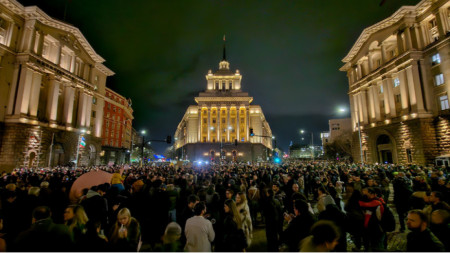
Minutes before the second and final reading, at the parliamentary budget and finance committee, of the state budget for 2026, the leader of the biggest party represented in parliament GERB Boyko Borissov halted the procedure and sent the draft bill..






 Cloudy
 Scattered showers
 Snow
Snow Rain / Snow
 Cloudy
 Значителна облачност със сняг