
After almost a month of backroom and public bargaining, after a series of sensational and surprising twists on the political and parliamentary scene, on the last day and hour of the work of this Parliament before its dissolution arrived its decision to increase the budget for this year of the National Health Insurance Fund, which finances the health services for all Bulgarian patients.
Well, the insurance institution has received 50 million euro less than it demanded and than it claimed was lacking for its normal functioning until the end of the year, but its budget was increased by a little over 100 million euro. Is this more or less than is needed can be understood by recalling that the cost of the treasury for this year is 1.4 billion euro. Experts believe that the financial injection from the state budget will not solve any of the chronic and longstanding health problems in Bulgaria, which falls into an ever deeper crisis and is making its services for patients even worse. But observers point out that this is still a breath of fresh air that will allow at least to maintain until the end of the year the not particularly high level of healthcare reached so far, and that was in almost a permanent political crisis, broken state and public institutions, European and parliamentary elections, and at least three consecutive governments in just one year.
It is true that social and health insurance almost anywhere in the world is experiencing a shortage of funds and that this deficiency is not due to lack of will to find the necessary money. Just the needs of the people in this regard are rising steadily. The population everywhere lives longer, i.e. receives pensions for a longer time. But longer life means more and more expensive medical care. Therefore, public health budgets and pensions over the world are constantly increasing and constantly not sufficient.
From this perspective, Bulgaria makes no exception, but rather only confirms the general rule. Bulgaria’s guilt, if you can use that term in this case, lies in the fact that the country failed quickly enough and decisively enough to reform and adapt their social and health systems, so that even in the poorest country in the European Union the elderly people and the sick might live in acceptable conditions. These reforms are of course painful and difficult to accept by the people and they can even cause social and political tensions, but are inevitable.
So no financial injections were not able to overcome the chronic defects in these systems, they play a role more of an aesthetic that temporarily reduces pain, but does not treat the disease itself. From this perspective, the increase in the budget of the National Health Insurance Fund in Bulgaria, which the Parliament has just approved, is good but only a temporary solution. And with the real problems will need to be tackled by the new leaders who will come to power after the early parliamentary elections in October.
English: Rossitsa Petcova

The Bulgarian minority in Romania marked a significant event with the official opening of the Bulgarian Inn in the village of Izvoarele (Hanul Bilgarilor), Teleorman County (Southern Romania)- a locality with Bulgarian roots dating back over 200 years...

The 14th edition of DiVino.Taste, Bulgaria’s leading forum for wines and winemakers, will take place from 28 to 30 November at the Inter Expo Centre in Sofia. Over 80 producers from all wine regions will participate, offering tastings of around 600 of the..
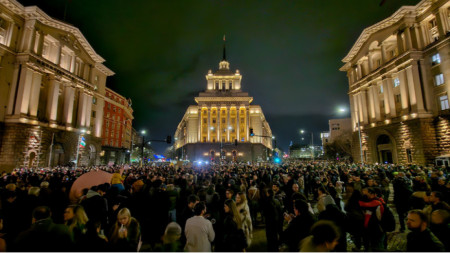
Minutes before the second and final reading, at the parliamentary budget and finance committee, of the state budget for 2026, the leader of the biggest party represented in parliament GERB Boyko Borissov halted the procedure and sent the draft bill..








 Mostly Cloudy
 Rain
Rain Scattered showers
 Cloudy
 Cloudy