The results of the 5 October snap parliamentary elections singled out eight parties that will be entering the future 43rd National assembly. Forming a cabinet will be a very difficult thing.
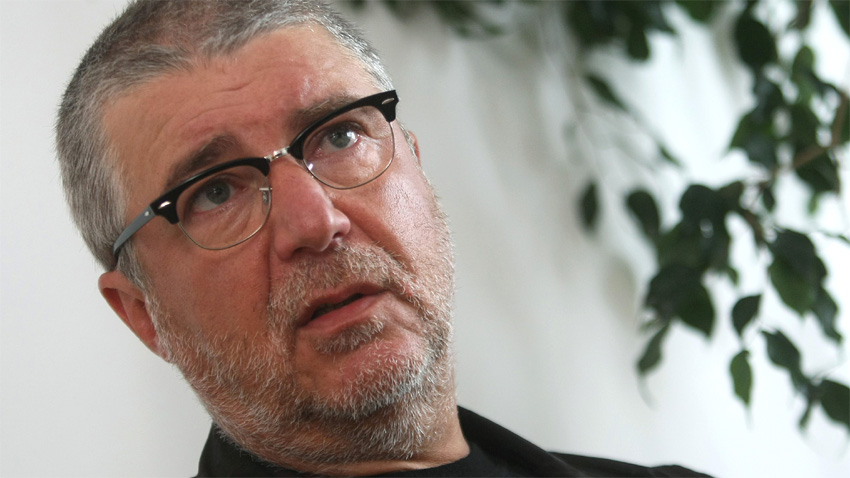
“To my mind this fragmented parliament is indicative of something I myself have talked and written about many times,” says for Radio Bulgaria Alexander Andreev from Deutsche Welle.
“In Bulgaria the crisis is neither economic nor financial, nor is it social or demographic, it is a moral crisis,” he goes onto say. “People have lost trust and the fact that they are unable to elect politicians to govern them is a demonstration of this loss of trust. Confidence in representative democracy is dropping dramatically. If one is to take a look at the internet forums one will see that representative democracy is in fact being widely rejected. All kinds of other alternatives are put forward, the most unobjectionable among them being direct democracy. But there are others much worse: from dictatorship to “sweep them all away”. One of the things that could be done to restore people’s trust, at least in part, would be the formation of a coalition government that is as broad as possible. It must have at least the nominal confidence of the majority of the voters, a government that would undertake urgent reforms this very winter. Reforms in the sphere of the judiciary, the administration, in combating corruption, in healthcare, in education and power generation.”
In the words of Alexander Andreev the formula for success would be a coalition government comprising GERB, the Bulgarian Socialist Party and the Reformist Bloc. Here is how he formulates his reservations regarding the Movement for Rights and Freedoms and the Patriotic Front:
“The Movement for Rights and Freedoms has in the past decades lost much of the public’s trust and has turned into a party that is “untouchable”, a party nobody wants to have anything to do with,” Alexander Andreev goes on to say. “Whereas the Patriotic Front, being a new formation is still too amorphous, with an obscure political orientation and obscure goals. I am suspicious of parties that step out onto the political stage with bombastic statements of their patriotic goals, without any clarity as to the policy they intend to pursue.”
How will Europe and more specifically Germany react to the results of the election in Bulgaria? Alexander Andreev:
“One of the most positive sides to this election is the fact that the vast majority of Bulgarians cast their vote for the country’s European and Atlantic orientation,” Alexander Andreev says further. “Bulgarians have always had more confidence in the EU compared to any other member country. Against the backdrop of what is happening just a hundred kilometers or so from our Northeastern border, it is particularly important for Bulgaria to reaffirm its Atlantic commitment. This will be proof that the country is part of the European and Atlantic family. I think Bulgaria could play a very positive role as mediator for a much needed rapprochement between Russia, the EU, NATO and USA. They should ultimately sit down at the negotiating table and resolve their huge differences so as to stop the bloodshed in Ukraine and prevent any bloodshed in future. Bulgaria is traditionally oriented towards friendly relations with Russia and this is rooted in our history, religion and language. The leanings towards Russia run high in Bulgaria, unlike Poland or the Czech Republic for example. Though it is a small country, Bulgaria could play a modest role as mediator on a much bigger political stage. And this would be a foreign policy task of paramount importance for the future cabinet,” says in conclusion Alexander Andreev from Deutsche Welle.
English version: Milena Daynova
Romania continues policy of gradual budget deficit reduction Romania should end the year with a budget deficit amounting to 8.4%, as compared to 9.4% at the end of 2024, as negotiated with the EU, PM Ilije Bolojan has announced. During his visit..
GERB-SDS party maintain their dominance in new parliamentary elections with 26.4%, show the results of a survey by the sociological agency "Trend". The poll was conducted on behalf of 24 Chasa daily through a direct standardized "face-to-face" interview..
A new path ahead for the European Union – this is what the President of the European Commission Ursula von der Leyen outlined in her annual state of the union address in Strasbourg a few days ago. To summarize – the economic and military..




 Mostly Cloudy
 Rain
Rain Scattered showers
 Cloudy
 Cloudy