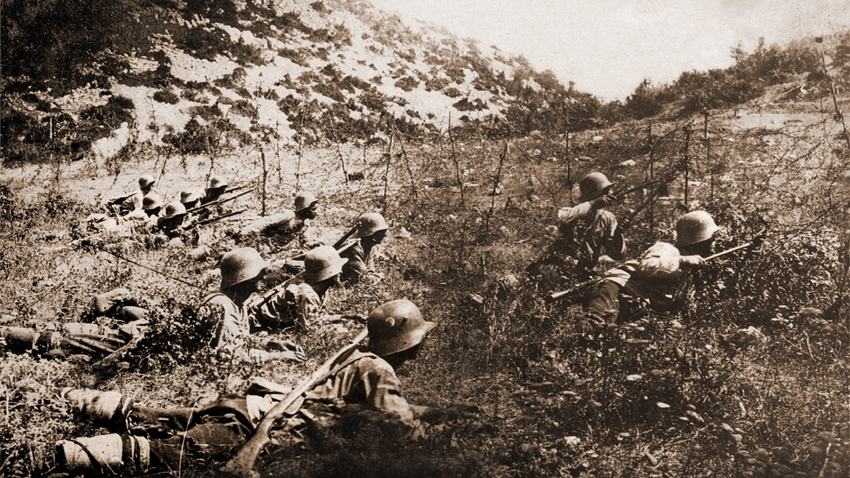
100 years ago on October 14th, Bulgaria joined the First World War. This happened after the Balkan Wars in 1912 and 1913, in which Bulgaria aimed to free territories with predominant Bulgarian population. The first Balkan War was successful but the second led to a catastrophe. The decision of Tsar Ferdinand and the government of Vasil Radoslavov for Bulgaria's entry into the global conflict is assessed today as a political mistake. But what was the public sentiment back then in the country after the "lost victories" in the Balkan War and Bulgarian-populated lands remaining under foreign rule? According to Assoc. Professor Lisbeth Lyubenova, from the Institute for Historical Studies at the Academy of Sciences this is a very complex topic. Recently discovered documents from the personal archive of Vasil Radoslavov indicate that until the very last moment Bulgaria had been searching for a way to avoid the war. Immediately after the Second Balkan War, back in 1913th, talks started and Radoslavov was trying to receive the so-called armed neutrality. When the two opposing sides in the war were defined, negotiations started with countries of the future Entente, as well as with Turkey. The Bulgarian authorities tried to negotiate compensations for Bulgaria if it did not join the war.
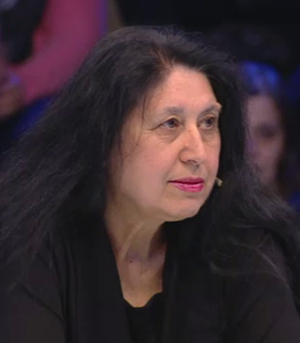 "This is a very long and complex diplomatic correspondence, Associate porffesor Lyubenova says. And it really shows the desire of the Bulgarian government to avoid war. There are some interesting documents which show Radoslavov was an idealist who imagined that the great powers would fight each other until exhaustion and after that Bulgaria would place on the diplomatic table the question of Macedonia. And since no one would have wanted to fight anymore, the problem would be solved. It did not happen this way as provocation shots on the Bulgarian -Greek border were soon to be fired. Turkey also did not want to link territorial compensations to the Bulgarian neutrality, especially in the event of Bulgaria joining Germany. Ultimately, just before October 1915 a note that urged Bulgaria to choose a side was received. Bulgaria was allowed neither by its neighbors, nor by the Great Powers to stay neutral.”
"In 1915 when we entered the war, Bulgaria had actually assessed well the political forces at the moment. Interestingly, almost all of Bulgaria’s diplomatic representatives predicted the end of Germany, as the war was growing, and the Germans did not have enough resources, especially at sea. England and later the United States dominated there. On land, however, the Germans were victorious. At a certain point Bulgarian diplomats were saying that Turkey and other allies of Germany were becoming more relentless because of the progress they made. The Entente was shocked by the way Belgium was crushed so quickly. When Bulgaria joined the war, Germany had already pushed away Russian troops, showing its potential to win on land despite losing colonies in China and Africa. "
During the First World War the Bulgarian Army achieved a series victories: in Macedonia, Dobrudzha, and elsewhere, but the war was lost because Bulgaria sided with the Central Powers. According to Associate Professor Lyubenova, the enthusiasm during the Great War, was not the same as during the Balkan Wars. They seem to be the top of Bulgarian patriotism on a quest to solve the national question.
"Initially, when the war began, patriotism was running strong, but at the end this was not so because of a number of reasons. First, Bulgaria could not resist economically, even though it was more or less a closed economy and was not associated with a particular active foreign trade. Bulgaria did not have a well developed industry. It was a very harsh time for the population, as war continued more than expected. Moreover, military reports show rations on the front were reduced. Soldiers received half a bread a day,” the associate professor says.
How should the wars Bulgaria fought for national unification be taught in local schools?
Eventually, pragmatism and economic interests dominate and no one is interested in the sufferings of small nations, Associate professor Lisbeth Lyubenova says in conclusion.
English: Alexander Markov
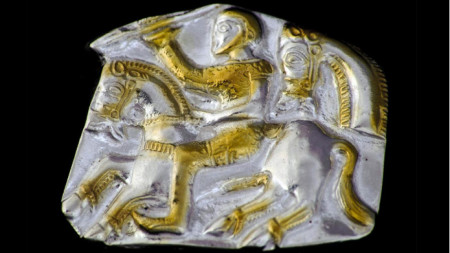
In the world of the Thracians, who had no written language, the most important messages were conveyed through art. The Letnitsa Treasure is precisely such a message — about power, beliefs, and the path to wisdom . This unique discovery, dated between..
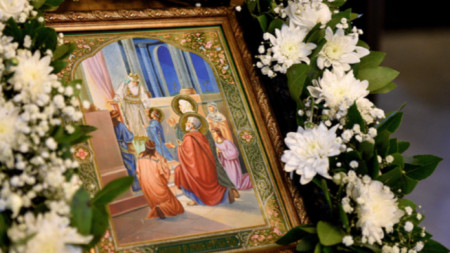
On November 21, the day of the Presentation of Virgin Mary (or the Entry of the most Holy Theotokos into the Temple), the Orthodox Bulgarians also celebrate the Day of the Christian Family and the Learning Youth. The holiday was established by the..
During a visit by the Radio Bulgaria team to the Bulgarian Orthodox Parish "Nativity of the Mother of God" in Geneva, we had the pleasure of meeting Ventseslav Sabev, the son of long-time church history professor at the Sofia Theological Seminary,..



 Partly Cloudy
 Mostly Cloudy