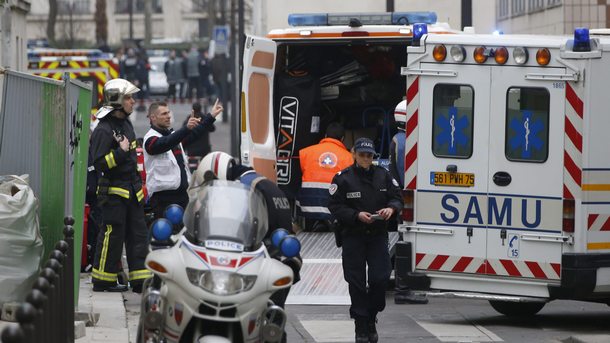
Friday the 13th once again proved notorious. After a series of explosions at 6 locations in Paris, nearly 130 people were killed as their number may further rise. The Bataclan concert hall in the French capital city was one of the places where the number of victims and injured was the highest. When Islamic terrorists attacked, some 1500 people were present at the concert. Survivors said they first thought gunshots were part of the show, before hearing cries “Allah is great.”
The Islamic State group took responsibility for the barbaric attacks. French President Francois Hollande said that France would lead a relentless war against terrorism. Bulgarian Foreign Minister Daniel Mitov, Prime Minister Boyko Borisosv and President Rosen Plevneliev defined attacks as "inhuman act directed against the very principles and foundations of democratic societies." According to journalist Elena Yoncheva, what happened in Paris was a continuation of the attack against Charlie Ebdo magazine. According to her, the time was not chosen randomly, because it comes on the eve of Turkish invasion in northern Syria and yet another conference on Syria, held in Vienna.
The attack against Charlie Ebdo showed that a permanent and sustainable risk of terrorist acts in Europe exists. If earlier the EU was on a crossroads, it is now time for it to choose which way to go. Will it continue to be tolerant protector of refugees coming from the Middle East and Africa, or will it finally take a strong position and tackle the crisis. The existence of the European Union depends on addressing the Islamic State and the refugee problems. This is not nationalistic talks but reality, which has so far remained somewhat neglected. The EU continues to believe that the Middle East conflict is local and that it would not spread to the European continent. But after the attacks in the very heart of Europe, something would need to change. In this country we ask ourselves what would happen if Bulgaria was attacked? Are we prepared to defend ourselves and can we prevent a similar attack? How would protesting policemen provide security for the Bulgarian citizens? We have started to forget that Bulgaria has also been a target of terrorists. On July 18, 2012 a suicide bombing attack at the Burgas Airport took the lives of 7 people. After a long investigation Hezbollah was blamed for the attack and everything went quiet. The debate on the readiness of security services to deal with such crises soon ended and everything continued to go on as usual. After a few weeks of discussions and showing solidarity with the French people in these difficult times, Bulgarian media would focus its attention on something else. But grave issues and questions remain... At least for those who really want answers and are not just chasing ratings.
English: Alexander Markov

The diplomas from the 11th master class in radio journalism of the Bulgarian National Radio – BNR Academy were awarded at a solemn ceremony on November 14. The lectures and practical classes in modern forms of radio journalism build on the professional..
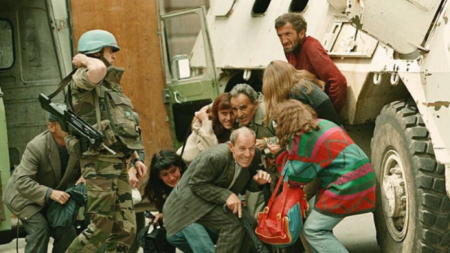
Italy investigates claims of hunting of people in Sarajevo in the 1990s The prosecutor's office in Milan has launched an investigation into shocking reports of organized "sniper safaris" in Bosnia during the war in..
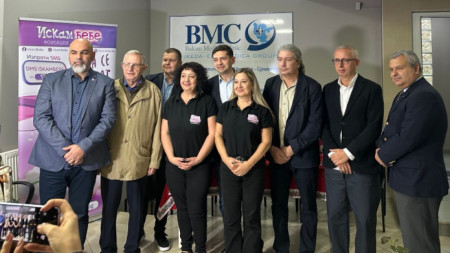
Albania and Bulgaria have joined forces in the name of one more child being born. In the late afternoon of November 7, the first-ever free reproductive medicine checkups, led by Bulgarian specialists, began in the Albanian town of Korçë — a region..



 Mostly Cloudy
 Cloudy
 Cloudy
 Scattered showers