The Child and Space Association is a non-governmental organization that sprang into being as a result of the work of an interdisciplinary research laboratory created under a French-Bulgarian training project called “Growing up without parents.” For eleven years the association has been pursuing activities aiming to give children at risk and children with special needs and their families support and hope.
Mrs. Vesela Banova, clinical psychologist and psychoanalyst with a Ph. D. in sociology, chair of the National Network for Children has been very active in all of the association’s efforts and especially the process of deinstitutionalizing children at risk. Here is Mrs. Banova about the association’s work during the past year:
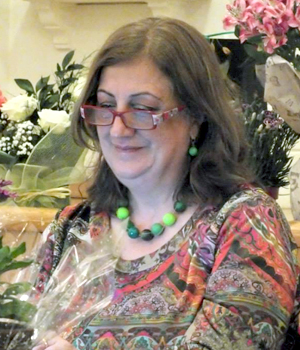 “In the past few years our cause has been to identify psychological suffering in children from schools and centres for children with disabilities. We have been helping the people working with them – social workers, psychologists, pediatricians, speech therapists, more than 90 in number. “Children and their symptoms”, our training programme for colleagues helping them solve problems of antisocial behavior in children or crime, as well as problems connected with mental retardation, has been running for ten years. Once again we are involved in a UNICEF project in Sliven, southern Bulgaria. The psychological support centre is the second such facility in the country, after the centre in Rousse and aims to develop a modern system assisting children in trouble with the law. The model is a public-private partnership. In conjunction with Sofia municipality we have been working on opening a third centre of this kind aimed exclusively at providing support to the 13 family placement centres in Sofia, which were made possible thanks to a big project “Childhood for all”. The centres accommodate many children with disabilities or special needs, mental problems and ailments,” says Mrs. Banova.
One more project the Child and Space Association has been working on is connected with different kinds of activities at the women’s prison in Sliven in support of incarcerated women. They are able to obtain an education, to do applied arts or drama, to learn how to be good mothers because the prison has a nursery for children born there and, if the mothers so wish, the children can remain there until the age of one. The association has released a compendium called “Insider View” to help professionals working on problems connected with the resocialization and integration of incarcerated women, because their life on the outside is invariably accompanied by violence and lack of any support.
These projects are what motivated the people from the Child and Space Association to be more creative and unorthodox in their work, to spare no time and effort to help children and families in need lead a better life.
We asked Mrs. Vesela Banova what her view was of Bulgaria’s demographic problems and the crisis in families today:
“The Child and Space Association, in conjunction with the Bulgarian Academy of Sciences Institute for Population and Human Studies has been working on a project called “Vision of family policies”. A large part of the project involves a survey, conducted by the colleagues from the Academy, of one-parent or large families, multiple marriage families or different versions of modern families. 91 percent of the respondents say they are not happy with family support policies in Bulgaria. The second part of the survey takes a look at family policies in France, Great Britain, Norway and Germany. I myself worked on the analysis of France. After the 1970s steps were taken there to overcome the demographic crisis and boost birth rates by creating better conditions for working women who want to have children. France is very flexible in its family policies.”
These steps include tax incentives and an array of different children’s and family allowances.
Being a psychologist, Mrs. Banova says developing a demographic strategy is not enough to halt the demographic decline in Bulgaria. Because all people living in the country must like Bulgaria and want to have children here. The vision of family policies must cover all aspects of children’s welfare, families in all of their forms existing in the modern world rather than nostalgia for nuclear families that no longer exist.
English version: Milena Daynova

The Bulgarian minority in Romania marked a significant event with the official opening of the Bulgarian Inn in the village of Izvoarele (Hanul Bilgarilor), Teleorman County (Southern Romania)- a locality with Bulgarian roots dating back over 200 years...

The 14th edition of DiVino.Taste, Bulgaria’s leading forum for wines and winemakers, will take place from 28 to 30 November at the Inter Expo Centre in Sofia. Over 80 producers from all wine regions will participate, offering tastings of around 600 of the..
Minutes before the second and final reading, at the parliamentary budget and finance committee, of the state budget for 2026, the leader of the biggest party represented in parliament GERB Boyko Borissov halted the procedure and sent the draft bill..





 Partly Cloudy
 Cloudy
 Cloudy
 Mostly Cloudy