Analysts, authorities, media and international financial and economic organizations keep saying that 2016 was a year of unprecedented economic achievements of Bulgaria. This applies to both macroeconomic and microeconomic indicators at the level of individual companies. Both private business and the public sector seem satisfied with the results, especially since all believe that these achievements will not be repeated in 2017 and expect much more modest achievements in economic terms.
Over 17 billion euros entered state funds in 2016, or 3% more than previously-forecast. Some 16 billion euros have been spent. Ultimately, the treasury reported a substantial surplus of 1.6% of GDP.
Is this beneficial and where would these public funds go?
At first glance, the surplus seems positive, suggesting that authorities do a good job in collecting taxes, duties and various fees. And that is actually right - tax revenues marked a rise of some 1.2 billion euros. No less important, especially for a conservative government as that of the GERB party, was the fact they were spending as much as they could afford, without spending for various social luxuries and extras. Here the picture is more controversial despite ideological dogmas. The second government of outgoing Prime Minister Boyko Borisov was relatively parsimonious last year, but was unpleasantly surprised by a not so unexpected event. It had to pay about 600 million euros, for previously ordered two nuclear reactors for the cancelled project for a second nuclear plant in Belene. Some 500 million euros more must be added to expenditures as the government allocated the money for the renovation of multi-family buildings, where hundreds of thousands of Bulgarians live. There were controversial arguments because extreme liberals accuse the authorities that they raise the price of owners’ apartments for free.
If it was not for these two surprising payments, the state budget would have registered an even larger surplus. The question is if a surplus is necessary and what would be the best way to spend the money. In general, having a surplus of money is attractive and those who want to receive a part of these funds are many. Different social spheres are competing to show that they are in bad financial condition and they need government subsidies. These are spheres like healthcare, science and sports, education, military and police, as well as retirees with their miserable and humiliating pensions. No matter how fair the pie is shared, there would be some to remain unhappy. In fact the biggest risk lies in distribution of the money. Until the middle of the year Bulgaria will be ruled by a caretaker government appointed by the President in a situation of dissolved parliament. This caretaker government will hardly dare to make big spending, especially without parliamentary approval. So in practice this surplus is unlikely to come into use in the next six months and hardly anyone will receive additional public funding. It is best for the surplus to enter the fiscal reserve; as such plans have already been voiced. This way the fiscal reserve would reach the unprecedented level of 8 billion euros.
English: Alexander Markov
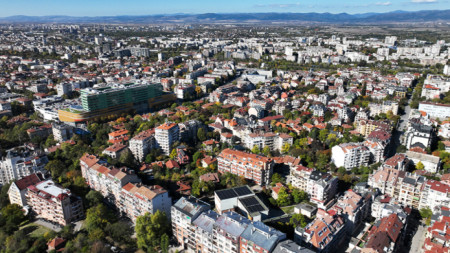
The average price of apartments sold in Sofia in the third quarter of 2025 reached €2,310 per square metre , marking an annual increase of 25.5%, according to data from Bulgarian Properties. While new developments remain popular, limited supply and..
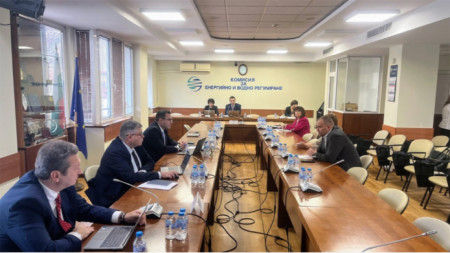
Natural gas prices in Bulgaria are set to fall by just over 4% in December , significantly higher than the previously forecast 1% drop, according to calculations by state-owned supplier Bulgargaz, reported BNR correspondent Yuliyana Kornazheva. This..
The Executive Board of the International Monetary Fund (IMF) has concluded the 2025 Article IV Consultation with Bulgaria. According to the IMF’s procedure for assessments and recommendations, domestic demand is driving a robust expansion of the..




 Scattered showers
 Rain
Rain Rain / Snow