
The Alexander von Humboldt Foundation, an organization which promotes international academic cooperation was conferred the highest Bulgarian institutional distinction – the honorary badge of the President. Bulgaria’s head of state Rumen Radev awarded the distinction to the foundation’s Secretary General Dr. Enno Aufderheide for the organization’s outstanding contribution to the development of Bulgarian-German relations in science and the support given to Bulgarian’s academic potential.
The Alexander von Humboldt Foundation has been assisting Bulgarian science since the 1960s when the first Bulgarian researcher arrived in West Germany on a foundation fellowship. Since then, even though the Cold War and the Iron Curtain put a spoke in the wheels of contacts between the two parts of a Europe divided, close to 400 Bulgarian researchers and individuals emblematic for the Bulgarian scientific community have been supported in their scientific work with a Humboldt fellowship. Many are holders of the prestigious Humboldt award.
“The fact itself that with the help of the foundation, the first Bulgarian scientist came to West Germany back in 1964 is an indication that science is capable of throwing bridges even when times are difficult politically,” said Dr. Enno Aufderheide in an interview for the Bulgarian National Radio. “This actually took place almost ten years before official diplomatic relations were established between Bulgaria and Germany. As the Iron Curtain fell, fundamental changes set in. Now we are free to exchange knowledge. It is gratifying that exchange is not just among men and women of science – there are many Humboldt fellows working in other spheres, including politics and economics…”
Dr. Enno Aufderheide, as you probably know, science in Bulgaria has been in a state of utter neglect for many years – financing having always been the prime problem, but also the reason why many young scientists have been emigrating from Bulgaria. When does this process become dangerous?
“When young scientists never return to their country, now that is already dangerous. The Alexander von Humboldt Foundation encourages young Bulgarians to come home, to Bulgaria – we give them a fellowship over the first year of research work after their return. But from then on there have to be working conditions for them that are attractive. If these people do not come back to Bulgaria, their role in the economic revitalization of the country will be sorely missed…”
Talking about funding research, there will probably be a lot of people who will argue that the basic survival needs of any nation must come first, and that science can wait. What would you say to that?
“He who does not sow shall not reap. We in Germany are happy to be living in an advanced country. But that is something we owe to the fact, among other things, that even in times of financial crisis, when there have been hard-fought battles for redistributing funding, the government has never stopped investing in science. That is why I think that Bulgaria must also invest in its crops if it wants to enjoy a good harvest.”
English version: Milena Daynova
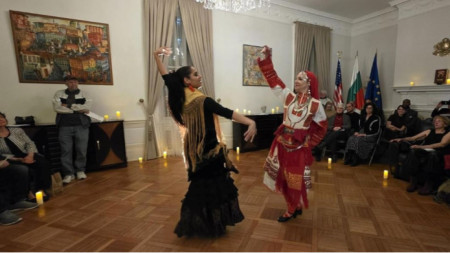
The Bulgarian Embassy hosted the second concert of the 17th season of the Bulgarian Music Society in Washington. On 14 November, guests enjoyed a unique show by two world-class artists, both originally from Bulgaria: Desi Jordanoff, a folk dance master,..

Generation Z students (born 1995–2012) are widely using artificial intelligence in their learning, with teachers reporting that more than 85% complete homework and study with the help of digital assistants. Children tend to see AI as a partner..

This year, Christmas has "arrived" in Sofia as early as November with the aroma of mulled wine, cinnamon and festive magic. Radio Bulgaria recommends that you visit some Christmas spots in the Bulgarian capital city: For those most impatient to..






 Mostly Cloudy
 Cloudy
 Cloudy
 Scattered showers