“Policy coherence for development has been an integral part of the foreign policy of Bulgaria since 2011 and it is set down in a government ordinance on the country’s involvement in international cooperation,” says Radko Vlaykov, Bulgaria’s ambassador to Serbia in an interview for Radio Bulgaria.
“This policy originates from our commitments as a country member of the EU, in accordance with the Treaty on the Functioning of the European Union and the Treaty on European Union. The second commitment arises from the obligations we have to the Organisation for Economic Cooperation and Development (OECD), though Bulgaria is not a full member. Policy coherence for development is targeted at countries which have stated their orientation towards European integration and integration into the EU or countries that have embarked on that road. They are divided into two groups – in the first group are the countries of the Western Balkans - Serbia, North Macedonia, Kosovo, Bosnia and Herzegovina, Albania, Montenegro, countries Bulgaria has done a great deal for politically. The second group is of countries from the Black Sea region – Ukraine, Moldova, Georgia, Armenia. The financial assistance we grant from Bulgaria’s budget contributes to the attainment of the aims these countries set themselves.”
Ambassador Vlaykov explains that the mechanism of requesting and granting development assistance has been simplified. The procedure of accepting and selecting project proposals is carried out at every Bulgarian embassy.
“The criteria set down are connected with the development of the individual countries and Bulgaria’s priorities in them. The cooperation and the development assistance are, in themselves, an important democratic tool. At the same time the way it is implemented is connected with a high degree of transparency, objectivity,” Radko Vlaykov says.
Numerous projects have been implemented in recent years in the countries of the Western Balkans and the Black Sea region.
“Our efforts are targeted at the reforms they are carrying through along their way to the EU. We support the democratic processes and the development of a different kind of social structure.
In 2018 the total amount of assistance we rendered all countries is around 3,600,000 Leva, or around 0.08 percent of the country’s GDP, with the target of reaching 0.33 percent of the Bulgaria’s GDP by 2030. At the beginning of the year an office of the ombudsmen of Bulgaria and Serbia was organized in Tsaribrod, Serbia. Together, they received members of the public, most of whom of Bulgarian ethnic origin. So, our efforts are aimed, on the one hand, at the consolidation of a different kind of democratic institutions, and on the other – at protecting the interests of our minority. In 2018 the projects in the Republic of North Macedonia were targeted at the prospect of NATO and EU membership. It is for North Macedonia that the biggest sums are earmarked in 2019. One of the priorities for Bulgaria in its assistance in cooperation development with Albania this year is the construction of an asphalt road between the town of Bilisht and the village of Vurnik estimated at over 1,120,000 Leva. The road is important to the development of the region inhabited predominantly by ethnic Bulgarians. Concrete projects worth around 1.5 million Leva are envisaged for the countries of the Black Sea region. The project in Moldova is for fitting out the regional department of education in Taraclia, another region with a Bulgarian national minority. In Ukraine, money has been granted for a research web portal for ensuring a high quality of higher education, in Georgia – for access to high-quality education, in Armenia – for the social inclusion of children with disabilities. In each one of these countries we endeavour to find the spheres in which they need support to develop society and to bring them closer to the criteria that can make their membership of the EU possible,” says in conclusion Bulgaria’s ambassador to Serbia Radko Vlaykov.
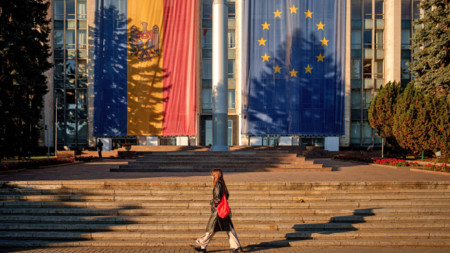
The election for parliament in the Republic of Moldova on 28 September, 2025 ended in a landslide victory for the ruling Party of Action and Solidarity (PAS). The result was seen by many as a validation of the country’s pro-European policy against the..
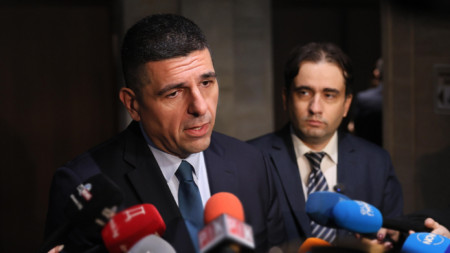
An emergency legal amendment has paved the way for the sale of Lukoil’s refinery in Burgas, opposition MP Ivaylo Mirchev, co-chair of Yes, Bulgaria, said on Wednesday. "Today, we have received confirmation that Lukoil has finally found a buyer for..
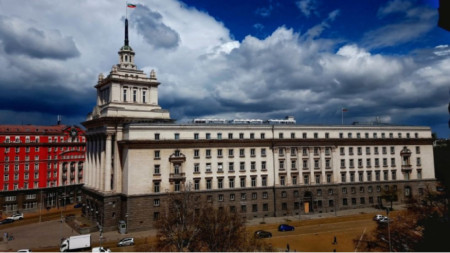
Last week, Bulgaria’s 51st National Assembly all but ground to a halt. On each of the three regular sitting days — Wednesday, Thursday, and Friday — parliament failed to reach the required quorum of 121 out of 220 deputies. On Friday, for instance, only..



 Mostly Cloudy
 Cloudy
 Cloudy
 Scattered showers