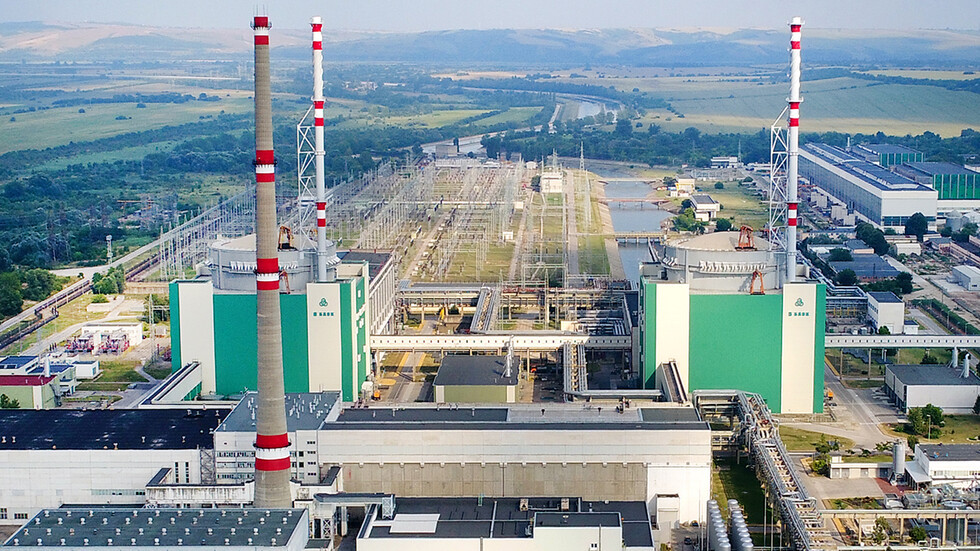
The government has given the green light to the procedure for the construction of the 7th nuclear reactor at Kozloduy NPP. Currently, this only Bulgarian nuclear power plant has two Russian reactors with a capacity of 1,000 megawatts each, which produce about 40% of the country's electricity.
The situation with the second planned Bulgarian nuclear power plant at Belene is not very clear, as so far two brand new Russian nuclear reactors of 1,000 megawatts each have already been purchased and delivered, and over 1.5 billion euros have already been invested in the construction by the Bulgarian state. At the beginning of the summer, three of the companies on the shortlist for participation in the procedure for selection of a strategic investor for Belene NPP - Rosatom, General Electric and Framatome merged, but more concrete action is lacking so far and the stagnation is explained by the coronavirus pandemic and the accompanying global economic crisis.
On the other hand, in accordance with international agreements, Bulgaria must shut down coal-fired thermal power plants, which provide nearly 50% of the country's electricity. This will obviously cause problems with the supply of businesses and the population with electricity and requires serious debate about how to compensate for the shortage. The government itself admits that this will be a difficult task, but in December it will have to decide how to reduce harmful emissions in Bulgaria by 55% by 2030.
Slavcho Neykov, chairman of the Institute for Energy Management, explained for the BNR:
"In fact, the topic of new facilities at the Kozloduy NPP site is not new at all. It has been formalized in legislative acts of the Bulgarian parliament since 2012, there is one decision from 2012 and one from 2013, but nowadays this decision seems a bit abstract. "
Despite the cautious attitude in the world towards nuclear energy, so far in Bulgaria its supporters have the upper hand and today it provides 33% of the electricity in the country. Among them is Prime Minister Boyko Borissov, who, among other things, is very keen on energy diversification and reducing the country's energy dependence on Russia. For their part, the experts of the Institute for Market Economics emphasize in a published analysis that "new technologies include nuclear power plants - these are small modular reactors that are able to change their production quickly and can meet the needs of Bulgarian electricity consumption."
"For the first time we are not following the times, but acting proactively. But I repeat - this is a very long process. The important thing is that the beginning has been set," said energy expert Prof. Atanas Tasev commenting on the government’s decision to build Unit 7 of Kozloduy NPP for the BNR.
At this stage, the Bulgarian Energy Holding is expected to start researching in consultation with high-tech nuclear American companies the numerous issues surrounding the future 7th reactor of Kozloduy NPP. Who they will be and how long they will negotiate; who will build the facility and whose property it will be; what the capacity of the reactors will be, how much the project will cost, are all questions that have no answers yet. It is no coincidence that experts predict the possible commissioning of the new 7th reactor not until the distant 2050.
All this means that there are plans and ideas for the development of the Bulgarian energy sector in the new decarbonized era, yet the question remains about the economic efficiency of these projects and the geopolitical balances and contradictions between the US and Russia, which are the major global players in nuclear energy.
English Rossitsa Petcova
Bulgaria’s Ministry of Finance has published the draft state budget in euros for 2026. The country’s GDP is projected to reach EUR 120.1 billion, with an economic growth rate of 2.7%. Planned revenues amount to EUR 51.436 billion, or 42.8% of GDP...

In 2024, 8.2% of people aged 18 or over who declared to be at work (either employed or self-employed) in the EU were at risk of poverty, according to data from Eurostat, cited by the BNR's Horizont channel. In Bulgaria, this share reached 11.8%. The..
The two largest trade unions in Bulgaria - the Confederation of Independent Trade Unions in Bulgaria and the Confederation of Trade Unions "Podkrepa" - are organizing a warning protest in front of the Council of Ministers building. It is planned for..







 Mostly Cloudy
 Rain
Rain Scattered showers
 Cloudy
 Cloudy