More and more tobacco growers have been abandoning this trade and looking to a much more lucrative livelihood – saffron. All the more so that the price of “red gold” has been going up, as it is used to improve the taste of tea, cakes and drinks, but also in medication applied in the treatment of coronavirus.
The first saffron crocus bulbs were imported by Hasan Tahirov who opted to abandon his life in Sweden where he had emigrated and return to Bulgaria. He had bought 70 bulbs in Turkey which he gave out to people in the villages in the environs of Kurdzhali, some he planted in the yard of his own house in the Rhodopes. Now saffron growing has become widespread and the members of the Bulgarian National Association of Producers of Saffron and Organic Saffron Products tend to 1,000 hectares of saffron.
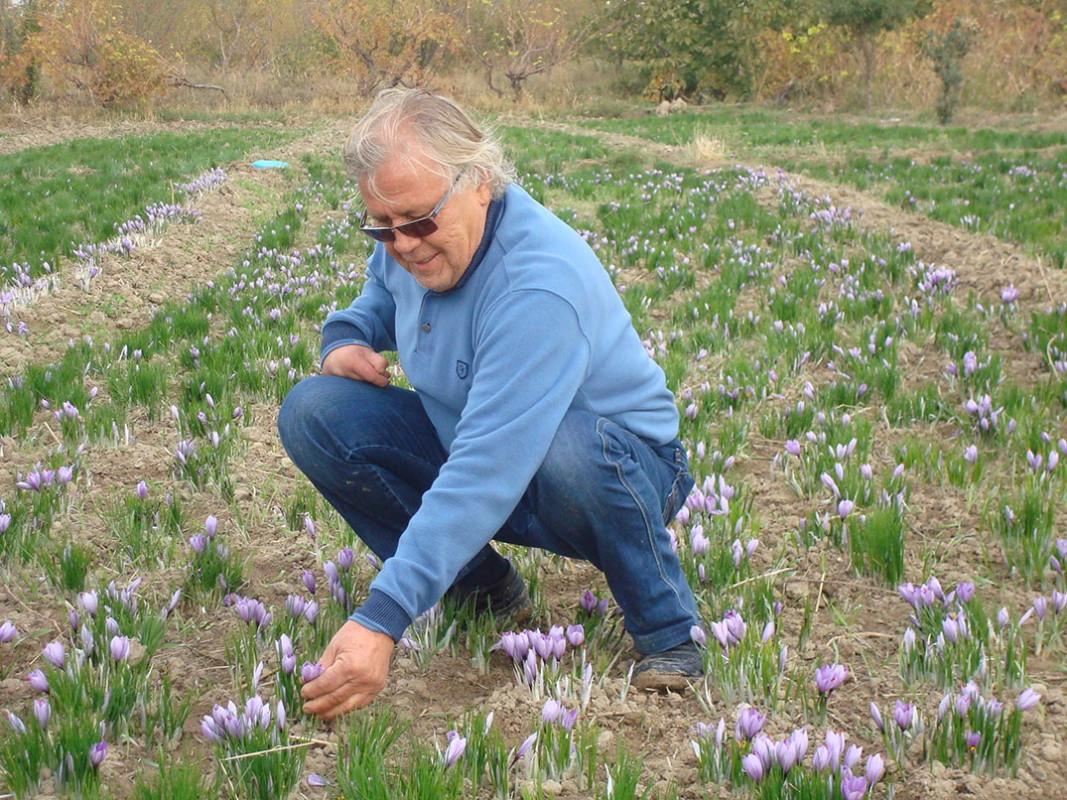
“More than 8,000 saffron producers who are members of our association but there are others who are not, probably several thousand more,” Hasan Tahirov, chairman of the Bulgarian National Association of Producers of Saffron and Organic Saffron Products says in an interview for BNR- Blagoevgrad. “Saffron is grown in the regions of Kurdzhali, Haskovo, Blagoevgrad, in Bansko too there are many people who grow saffron. More and more tobacco growers have been turning to saffron seeing that there is more money in it. When someone in a given village starts growing it, other people follow. This year its price is expected to go up by 20-30%. One gram is probably going to be traded for 13-15 Leva, and one kilogram – for 13,000-15,000 Leva respectively.”

Growing saffron has many advantages, Hasan Tahirov says. One of them is the return on investments. “You invest in September, and in November you get your money back plus the profit. And that is repeated over 7-8 years,” he says. You just have to dig in the plants and then pick them because on the next day the field is again in bloom.
The farmer says that growing saffron is enough to put food on the table for an entire family. The money from one hectare of saffron equals the earnings from 30 hectares of wheat or 70 of vineyards, Hasan Tahirov says. This means that a family that used to tend to half a hectare of tobacco and earned 9,000-10, 000 Leva can make the same amount of money if they grow saffron on an area of…0.1 of a hectare.
At the moment this spice is very much in demand, its price is going up and Bulgarians, who are among the biggest producers, are able to avail themselves of the favourable conditions prevalent on the world market.

“We have been advancing even more and are now between 3rd and 4th place,” Hasan Tahirov says. “But in terms of quality we are at the forefront because our nature is unpolluted, our air is clean and our land is fertile with lots of biological elements. Saffron thrives perfectly in any kind of soil and altitude does not matter in the least. Yet it is looking like mountain regions are the best places for it.”

Many educated young people have been opting to leave the big city and return to their ancestral homes in villages, where they can start growing “red gold”, as saffron is dubbed. And by doing that they just might be able to breathe life into villages which have been dying out along with the last of its inhabitants.
Interview by Biliana Slavcheva, BNR-Blagoevgrad
Editing by Diana Tdsankova
Photos courtesy of Hasan Tahirov and BGNES

The Bulgarian Embassy hosted the second concert of the 17th season of the Bulgarian Music Society in Washington. On 14 November, guests enjoyed a unique show by two world-class artists, both originally from Bulgaria: Desi Jordanoff, a folk dance master,..

Generation Z students (born 1995–2012) are widely using artificial intelligence in their learning, with teachers reporting that more than 85% complete homework and study with the help of digital assistants. Children tend to see AI as a partner..
This year, Christmas has "arrived" in Sofia as early as November with the aroma of mulled wine, cinnamon and festive magic. Radio Bulgaria recommends that you visit some Christmas spots in the Bulgarian capital city: For those most impatient to..







 Mostly Cloudy
 Cloudy
 Cloudy
 Scattered showers