Last week’s news that there is a new coronavirus mutation, Omicron, shook the world and many countries wasted no time and started closing their borders. This latest variant seemed to take us right back to where we started two years ago, when the first cases of the disease that turned our lives around appeared in China.
What lies in store for us all? Virologists and epidemiologists are yet to seek the answer to the numerous questions the new variant raises.
Experts say that what makes this variant different from all other coronavirus variants is that it has 32 mutations in the spike protein. Which means it could evade the vaccines now in existence which create antibodies against the protein of the first version of Covid-19, meaning that the current vaccines may not work. A statement to that effect was made by the CEO of the manufacturer of one of the mRNA vaccines who admitted there will likely be a material drop in the effectiveness of the vaccines. On the other hand, doctors who have come in contact with the new variant say it causes milder symptoms though it spreads more aggressively. Which means people may not take note of their mild symptoms and take no precautions, spreading the virus freely.
“The fears are rooted in the fact there exists a high risk of reinfection,” Prof. Hristo Naidenski from the Bulgarian Academy of Sciences Department of Infectious Microbiology said for the BNR.

“The multitude of mutations in practice afford the virus a much higher reproductive potential and make it much more contagious, which in epidemiological terms means people who have had Covid-19 and have recovered and people who are vaccinated could be affected. The challenge to science is that there is a gene that can be diagnosed using a PCR test – through the missing “S” gene. What has been proven with this variant is that a mutation that is shared by the Beta and Gamma variant reduces the ability of antibodies to connect with the “S” protein. And that affects control of the infection and its spread.”
What is known about the infection at this point is that it causes a scratchy throat, a dry cough, and muscle aches. It is not yet known to what an extent and whether the vaccines administered will affect the severity of the infection caused by Omicron. And whether the therapeutics applied now will be effective against it:
“It is high time the vaccine was updated because several variants have emerged and the immune system is unable to respond effectively to the existing epidemiological background,” Prof. Hristo Naidenski says. “To be more effective, vaccines should be adapted to the virus currently in circulation. Of course, there is good news as well – clinicians in Canada and South Africa say that it causes milder symptoms. What is worrying is its rapid spread which would mean it will find fertile ground among the immunocompromised and people with underlying health conditions.”
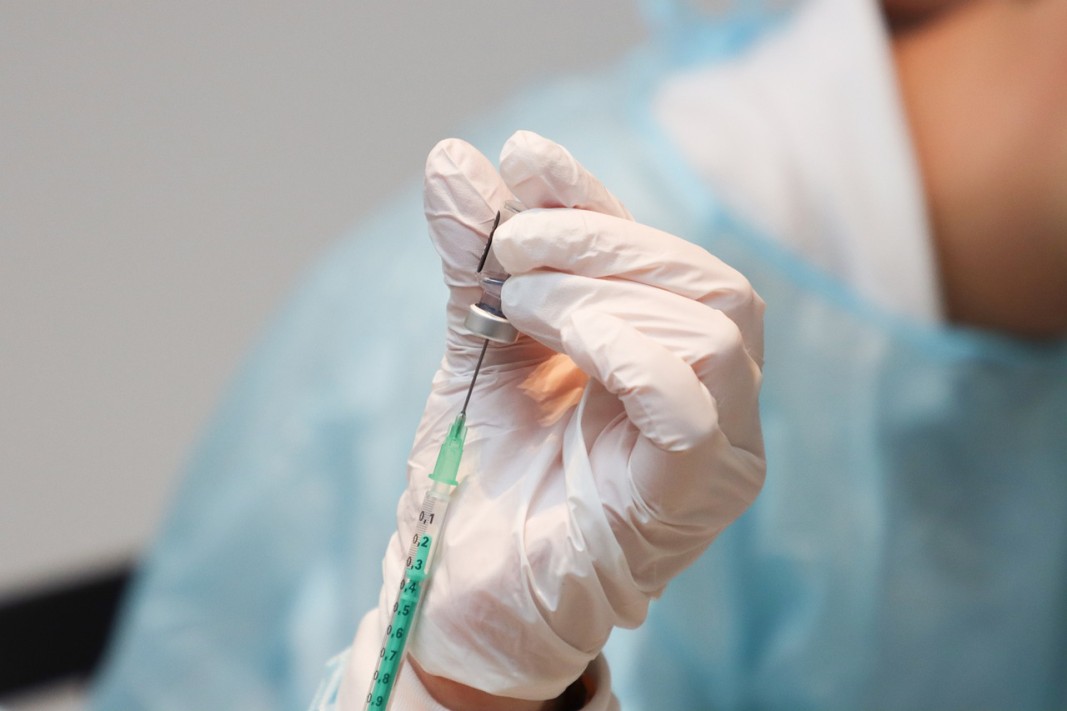
It is still too early to tell what the Omicron mutation will bring. Until then specialists are adamant that all anti-epidemic preventive measures must be observed.
Photos: Pixabay, BAS

Timișoara, a large multicultural city in western Romania, is the center of the historical community of the Banat Bulgarians . The members of this community are descendants of settlers from the Bulgarian lands nearly three centuries ago, who have..

In Gabrovo – a city in the geographical center of Bulgaria, once described as the Bulgarian Manchester, but today facing demographic challenges – there are young people who believe that the future can be better and that this largely..

For 15 years, Stela Nedkova has been living in Brussels . After completing her education in Bulgaria, she decided to test herself in a different reality to see whether she could handle life’s challenges on her own, without her parents’ help. Stela faced..








 Scattered showers
 Cloudy
 Cloudy
 Rain / Snow