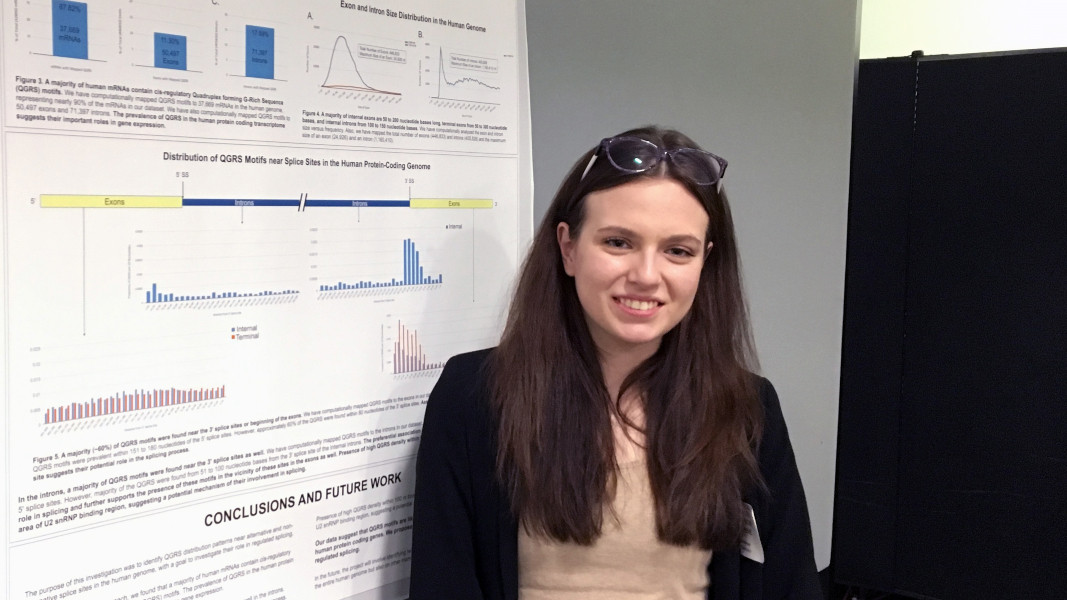
How does the science of tomorrow integrate the knowledge of all scientific branches to warn, find cures and seek salvation? Syncretic new sciences - bioinformatics, computational biology and artificial intelligence are in the search for early detection of tumors.
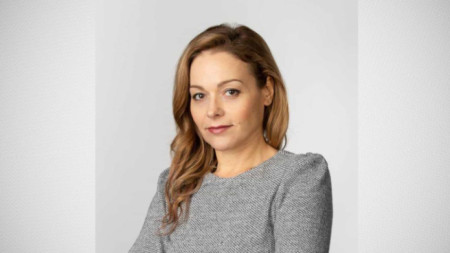
And so is young Bulgarian scientist Vanesa Getseva. Vanesa glides confidently and with flying colors through the vast sea of knowledge and discovery. Already a bachelor of computer science and bioinformatics from Ramapo College in New Jersey, she is pursuing a Ph.D. in Biological Sciences at Columbia University.
Getseva has three publications in reputable scientific journals. She is the winner of over twenty awards - among them the Presidential Award "John Atanasov" for her debut breakthrough in computer technology.
"I've always loved maths and information technology, ever since I was a child," says Vanesa. She started programming when she was in the fourth grade. At the age of 13 she was captivated by the world of scientific research, and a year later the child prodigy discovered bioinformatics.
"The fact that you can use computer science to do something meaningful in the sphere of biology was fascinating to me,” she adds.
Her ambition to learn from the best and to have access to the most advanced scientific knowledge took her to the United States. Ramapo College in New Jersey is one of the academic institutions where the American company, creator of one of the vaccines against coronavirus, recruited their scientists. While studying for a bachelor's degree, Vanesa worked on a project in the laboratory of Dr. Paramjit Baga and Scott Fries. There she studied the influence of certain elements in DNA that do not encode proteins in the mechanism for creating DNA diversity.
"These proteins have different cellular functions or properties," explains Vanessa Getseva. "There are advantages, but also disadvantages to that, because it is estimated that about 15% of human inherited cancers are associated with alternative splicing events. During the study, we were able use a database containing tens of thousands of human DNA sequences, as well as computer programs, created by us. As a result, we know that we can control certain hereditary and cancer diseases."
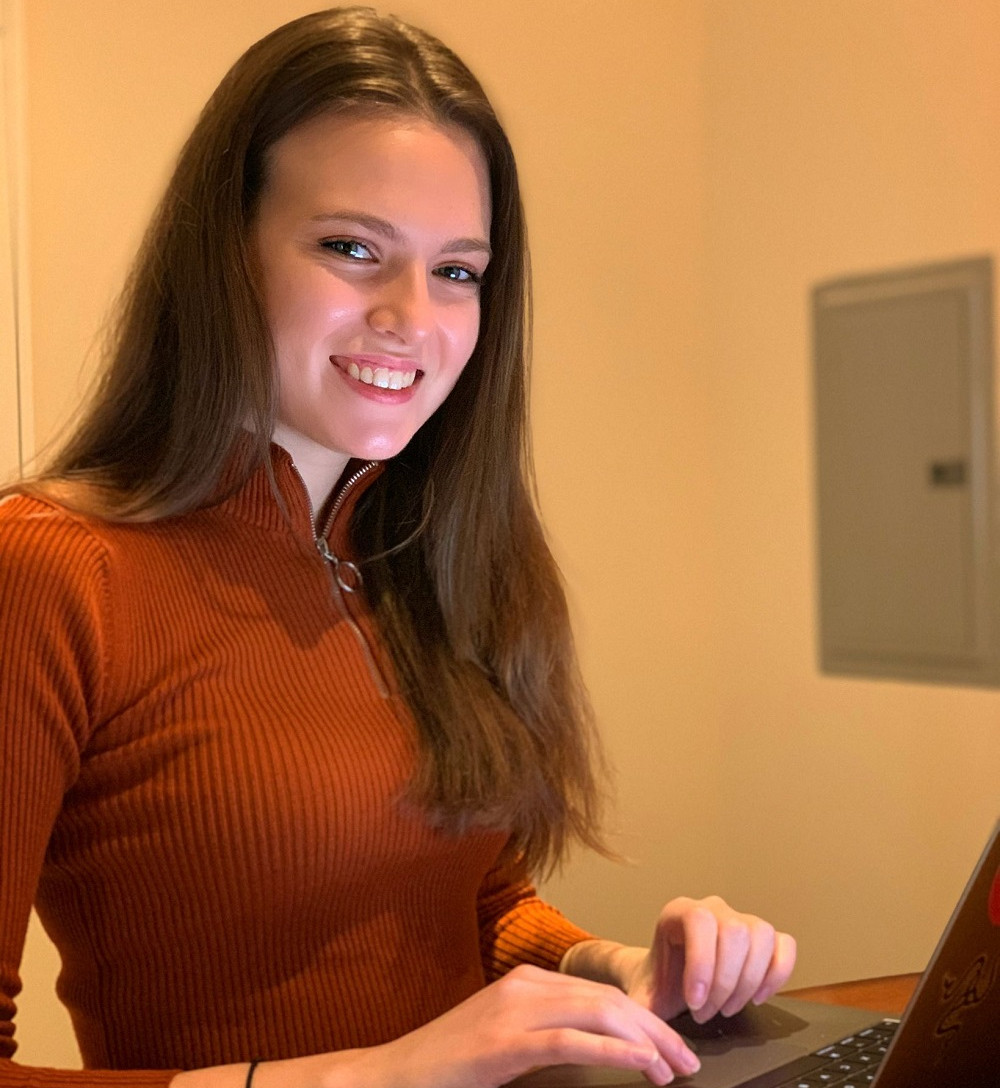
The latest project she took part in involved developing an artificial intelligence training model that can detect tumors or predict them.
“We have developed a deep learning model, which calculates the tumor frequency in histological images, finds areas in them with a high content of tumors,” says the young scientist. “Deep learning (a computer method for reproducing a dense network of neurons – editorial note) is currently being used a lot in the field of bioinformatics. We used publicly available histological images for the project. And our model did a great job. It can be applied directly to medicine.”
While working on her Ph.D. Vanesa lent a helping hand to a ninth-grader from her hometown of Shumen.
"Vesela is a programmer, too. We are working together on a bioinformation project, which we hope to present at a scientific conference very soon," says Vanesa. “I am currently learning to be a mentor and I am very happy to share my knowledge with this girl. This is something new for me, I am glad that I can be of help to motivated kids like her."
Vanesa Getseva admits that she misses Bulgaria a lot. For the next five years, however, she will have to focus on her studies in the United States. After that she hopes to start working for one of the big pharmaceutical companies. "When I finish my doctoral degree, I may go back to Europe - but who can say what will happen," she says.
Interview by Dobromir Videv, Horizont channel, BNR
Compiled by: Diana Tsankova
English version: Elizabeth Radkova
Photos: bioinformatics.ramapo.edu and private library
For the past four years, Neli Itskova has been teaching history and geography at the Bulgarian Sunday School “Peyo Yavorov” in Brussels. She says it took a long journey to fulfil her dream of working with children. Itskova graduated in pedagogy..
There are no accurate statistics on the number of Bulgarians living on Jamaica. However, to prove that it's impossible to find a place in the world without at least one Bulgarian, we talk to film director Ina Sotirova, who has lived on the island for ten..
The University of Edinburgh is the fourth largest in the UK, having opened its doors in 1583. For 57 years, His Highness Prince Philip was its rector, and since 2011, his daughter Princess Anne has held this role. For a decade now, Bulgaria's Denitsa..






 Mostly Cloudy
 Cloudy
 Cloudy
 Scattered showers