A team from the Institute of Information and Communication Technologies (IICT) at the Bulgarian Academy of Sciences is to work under the project "Auto-adaptive neuromorphic brain-computer interface" related to the application of artificial intelligence in healthcare. The project was approved for funding by the European Commission. It aims to allow people with severe spinal cord injuries, who are unable to move their lower limbs, to "start walking". Together with colleagues from France and Switzerland, we have been trying to create a device that reads brain signals and transmits them to other devices that help the patient move, explained Dr. Petya Koprinkova.

“I call on all representatives of the Movement for Rights and Freedoms in local government — mayors and municipal councilors — to ensure security and predictability for the people and to take the necessary steps to keep all local taxes and fees..

Bulgaria has climbed to 11th place in this year’s Digital Quality of Life 2025 (DQL) index published by Surfshark, up from 18th last year, BTA reported. The index evaluates countries’ digital well-being across five dimensions: fixed broadband..
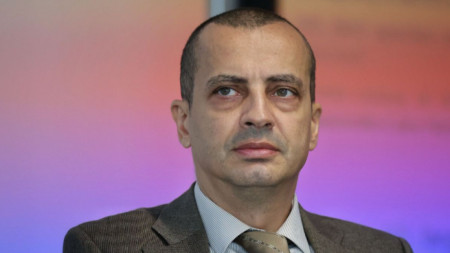
Around 90% of the antiques seized during an international operation targeting a cultural property trafficking network will be returned to Bulgaria, Deputy Minister of Culture Todor Chobanov told “Nova TV”. “This is an unprecedented operation in..







 Mostly Cloudy
 Cloudy
 Cloudy
 Scattered showers