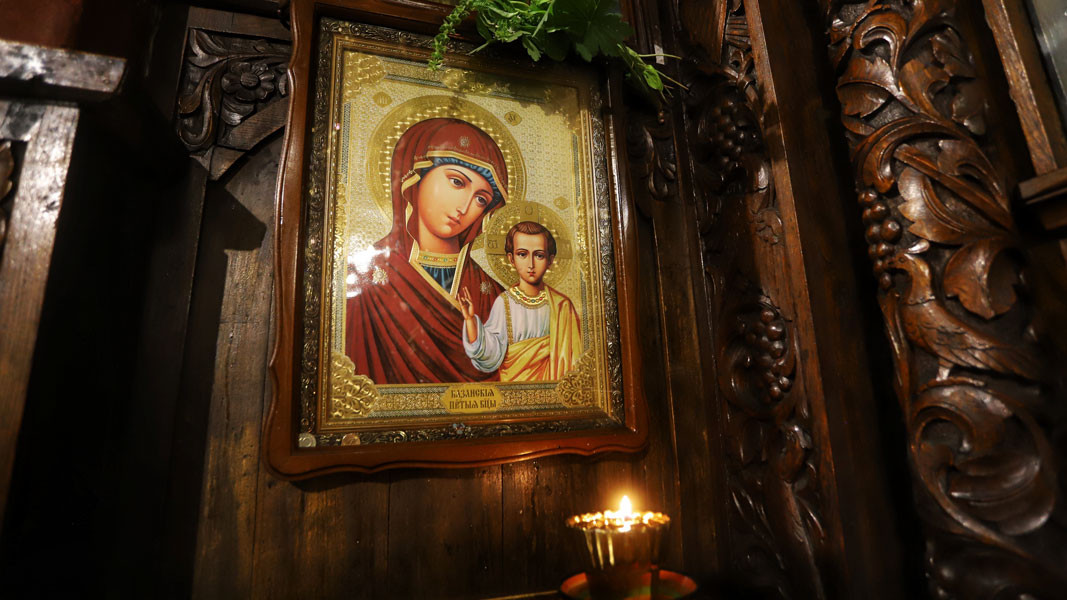
The Assumption is one of the biggest summer holidays, marked by the Orthodox Church on August 15 (August 28, according to old style calendar.) The holiday has its origins in the Jerusalem Church and is one of the most ancient celebrations, dedicated to the Theotokos. In the icons, as well as in the festive liturgy in Orthodox churches on Assumption, the glorification of the Mother of God reaches its apogee.
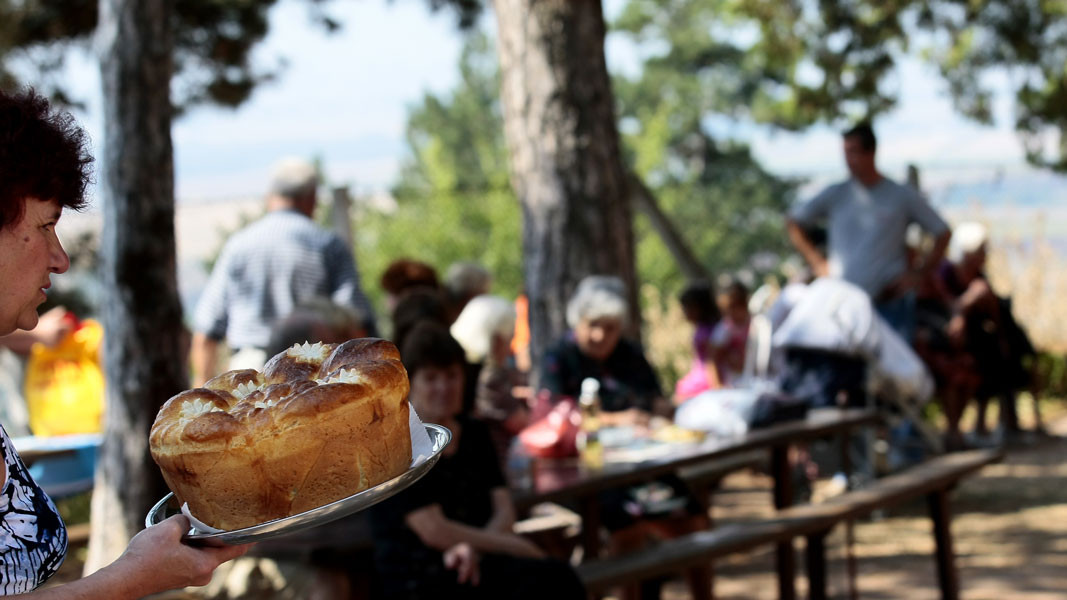
In the villages where there is a church or a monastery named after the Mother of God, this day is especially solemn and a sacrificial offering for health and blessing is consecrated after the Divine Holy Liturgy. According to traditions, village meetings and family gathering are held. In Bulgarian folk songs, legends and beliefs, the Mother of God is a righteous, loving mother, merciful even to sinners. She is close to people, protects them, guides them, gives them signs how to act, which way to go, what to beware of. It is not by chance that in their prayers, the old Bulgarians call her "Dear Mother of God", filled with love and warmth, as for a native mother. She is believed to be the patroness of motherhood, women and children. That is why this is primarily a holiday for young brides who have not conceived. And since the day is dedicated to the Mother of God, women do not engage in housework. Those who do not have children yet bring home-made towels, aprons, socks, and flowers to the church and place them under the icon of the saint. And in the monasteries where her miraculous image is preserved, night vigils and liturgical processions are held as a sign of respect and adoration.
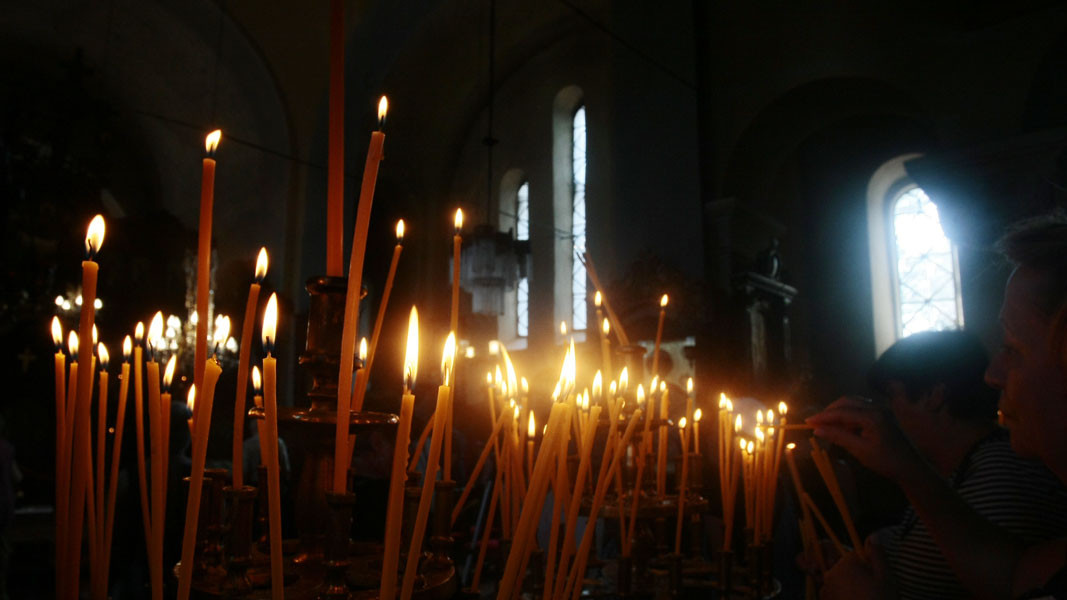
This is also the case in "Assumption of the Blessed Virgin Mary" Monastery in Iskrets, located at the foot of Mount Gradishte in Stara Planina. You can learn more about it from Radio Bulgaria’s article “The Assumption Monastery in Iskrets.”
Compiled by: D. Grigorova
English version: Alexander Markov
Photos: BGNES
The newest exhibition at the National Museum of Military History in Sofia, 'War and the Creatives: A Journey Through Darkness' opens today, offering free entry as a gesture to those who were unable to visit during the recent renovations. Rather than..
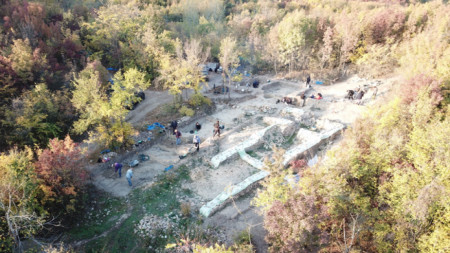
A 5,000-year-long history lies hidden in the ruins of the medieval fortress “Ryahovets” near the town of Gorna Oryahovitsa where active excavations began ten years ago. On this occasion, on November 17, the Historical Museum in Gorna Oryahovitsa..
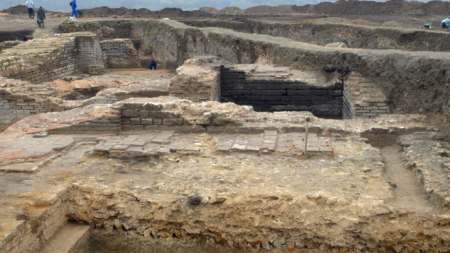
Just days ago, archaeologists uncovered part of the complex underground infrastructure that once served the Roman baths of Ratiaria - one of the most important ancient cities in Bulgaria’s northwest. Founded in the 1st century in the area of..





 Rain
Rain Scattered showers
 Cloudy
 Snow
Snow Rain / Snow
 Clear
Clear