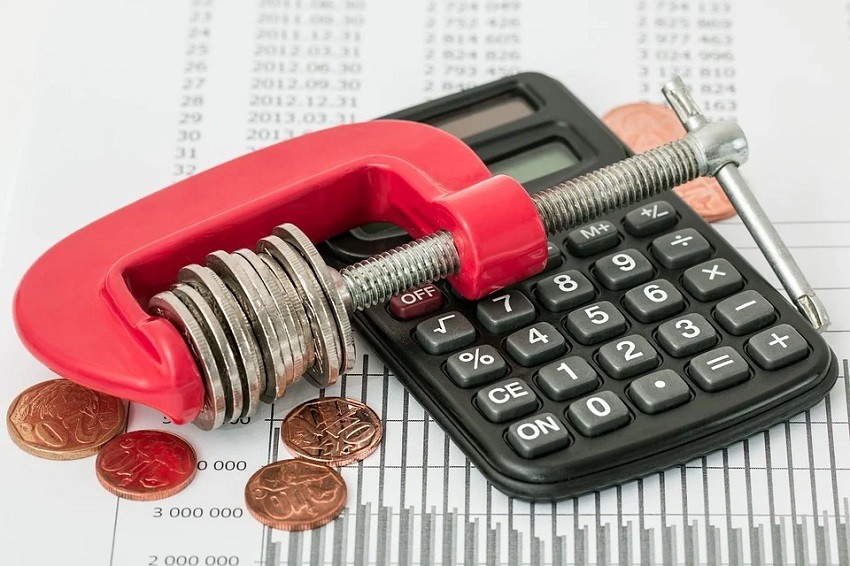
For some people, a crisis equals an opportunity. Is it the same for Bulgarians today, when the elections outlined continuing political instability, prices do not stop their growth, and incomes seem to be "frozen" on the edge of survival?
Against this background, impressive are the words of Dobromir Yanev, a financial consultant with many years of experience in lending, who says that, "we have not yet reached the state in which we can use the word "crisis" and trumpeting in the media is rather scaremongering."
"But this does not mean that the crisis is not coming - on the contrary. It just doesn't come all of a sudden”, he added in an interview for BNR Burgas. “In Bulgaria, the effects of global events usually come with a delay of between 6 and 12 months. That's how it was in 2008, that's how it's happening now. While other countries can claim that they are in crisis because they have to take quite serious measures, we are still on the path to reach the state of crisis. Still, our stores are full, people have not stopped consuming, and the country manages to produce almost everything it needs - electricity, food products, grain."
The crisis will be seen in incomes and not in the lack of goods and energy, as it has happened before, the analyst pointed out. And this is already felt - we can buy fewer and fewer things with the money we receive for our work.

"We can say that for people who live on between 500 and 1000 leva / 250-500 euros/ per month, Bulgaria is already in crisis, as they already have to limit themselves in buying basic necessities. However, people who earn more than 3-4 thousand leva /1500 euros/ are not in a crisis, they are starting to refrain from some luxury purchases, not to travel so often, etc.. Historically, we associate the crisis with the lack of something - of groceries, electricity, water. In my opinion, there is more of an income crisis ahead, I don't believe there will be a time when there will be a shortage of things on the shelves. And there is no reason for our country to have another electricity regime or other similar difficulties, but there is a crisis in incomes. The good thing is that this has been talked about for a long time and people have time to take steps to soften the blow, which will be at different times for everyone, but it is bound to come.”
Is there a way to counteract the tremors? The levers in people's hands are limited and not everyone can use them, the financial expert is emphatic.
"All crises in the last 10-15 years have been imported in Bulgaria. They are not caused by internal factors, but by external ones. The current crisis comes from the war caused by Russia. Accordingly, the sanctions imposed by the EU and us as its members, i.e. we did not get ourselves into a crisis. We have leverage to reduce that impact and limit it. But these levers are in the hands of the state and its governance”, explained Dobromir Yanev.
Unfortunately, Bulgaria fails to take advantage of the slowing down of the influence of external factors on the lives of Bulgarian citizens. One of the reasons is that during the difficult years for the economy and finances, we were invariably in a political crisis and a change of political entities. All this affects the price paid by the average Bulgarian citizen.
Interview Mariyan Ivanov, BNR-Radio Burgas
Photos: Pixabay
The average price of apartments sold in Sofia in the third quarter of 2025 reached €2,310 per square metre , marking an annual increase of 25.5%, according to data from Bulgarian Properties. While new developments remain popular, limited supply and..
Natural gas prices in Bulgaria are set to fall by just over 4% in December , significantly higher than the previously forecast 1% drop, according to calculations by state-owned supplier Bulgargaz, reported BNR correspondent Yuliyana Kornazheva. This..
The Executive Board of the International Monetary Fund (IMF) has concluded the 2025 Article IV Consultation with Bulgaria. According to the IMF’s procedure for assessments and recommendations, domestic demand is driving a robust expansion of the..



 Overcast, rain
 Rain / Snow
 Cloudy
 Scattered showers
 Cloudy
 Rain
Rain