The assignment of tasks that are outside the job description, the lack of free medical check-ups at work, the refusal to pay overtime for replacing an absent colleague - this is just the tip of the iceberg of labor violations in Bulgaria, according to the annual report of the Confederation of Independent Trade Unions in Bulgaria (CITUB).
Nearly 20,000 violation reports have been submitted to trade unions across the country. It is common practice for employers not to allow their subordinates to take their full paid annual leave or to assign them additional work during vacation/sick leave. CITUB proposes the introduction of the “right to disconnect”, which is the right of an employee not to be expected to engage in business activity out of hours including answering work calls, emails, or other work-related communications.
The proposal follows a complaint from nearly 200 people who say they telework and receive assignments by email and phone during off-hours. This was announced by the vice-president of the CITUB Todor Kapitanov in an interview with Plamen Kotsev from BNR-Vidin.
"Abuses of unpaid overtime are becoming more common, with workers continuing to work extra hours that are not legally regulated and therefore not legally paid. Workers are increasingly having to stay beyond the fixed workday, working on holidays, on days off, even during sick leave. This is due to the shrinking workforce in all areas - there is more work that still needs to be done. However, all this is at the expense of workers' health and leisure. And there is a limit on working hours in the law, which must be 40 hours a week in a 5-day working week."
Reports of workplace harassment and even threats by employers are numerous, according to the CITUB annual report. What can be done about this?

"The Convention on Violence and Harassment must be ratified urgently to prevent these cases. There is still no definition of 'harassment' and 'violence' in our Labour Code. So the law needs to be very clear and explicit about responsibilities and penalties when there are such cases. Most often, this happens in small settlements where people do not have much choice about where to work and employers take advantage of this," Todor Kapitanov said.
In Bulgaria, it is very common for employees not to use their rest period, to stay at work after closing hours, and not to be paid for overtime... This leads to exhaustion and stress at work, says the CITUB report. Yet have workers in this country begun to assert their rights more often in recent years? "Absolutely yes!" says Todor Kapitanov, adding:
"And this is also due to the information campaigns that the unions conduct on a monthly basis in relation to different types of violations. People, I think, are not so amused by the situation in our country anymore, given that there are regulations, but these regulations are not being respected. Workers need to know that there are enough sources, and therefore trade union structures, throughout the country where they can get information about their rights and advice about what they their next steps should be when they feel they are being violated."
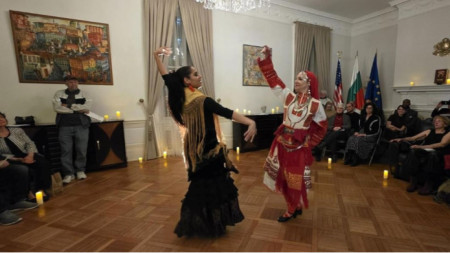
The Bulgarian Embassy hosted the second concert of the 17th season of the Bulgarian Music Society in Washington. On 14 November, guests enjoyed a unique show by two world-class artists, both originally from Bulgaria: Desi Jordanoff, a folk dance master,..

Generation Z students (born 1995–2012) are widely using artificial intelligence in their learning, with teachers reporting that more than 85% complete homework and study with the help of digital assistants. Children tend to see AI as a partner..

This year, Christmas has "arrived" in Sofia as early as November with the aroma of mulled wine, cinnamon and festive magic. Radio Bulgaria recommends that you visit some Christmas spots in the Bulgarian capital city: For those most impatient to..






 Cloudy
 Scattered showers
 Cloudy
 Fog
Fog Partly Cloudy