Giorgos Gerapetritis: Political dialogue, a positive cooperation agenda and confidence building measures are the three pillars for a rapprochement between Turkey and Greece
Political dialogue, a positive cooperation agenda on specific issues and confidence building measures – these will be the three pillars for a rapprochement between Turkey and Greece, as outlined by Greece’s new Foreign Minister Giorgos Gerapetritis in an interview with Kathimerini. In his words “the climate of confrontation that prevailed for a long time in the past was extremely damaging to both countries (Turkey and Greece – editorial note) and to regional stability”. The two NATO members have been vying for the maritime borders and the rights to probe for energy sources in the disputed parts of the Aegean and the Eastern Mediterranean. Minister Gerapetritis talked about the need to adopt a bold agenda as a legacy for future generations, while referring to the contacts he will have with his Turkish counterpart Hakan Fidan, who also recently took office as foreign minister. “I think the time has come to face squarely the wounds of the past and the challenges of the future,” Giorgos Gerapetritis said.
North Macedonia government submits constitutional changes to parliament 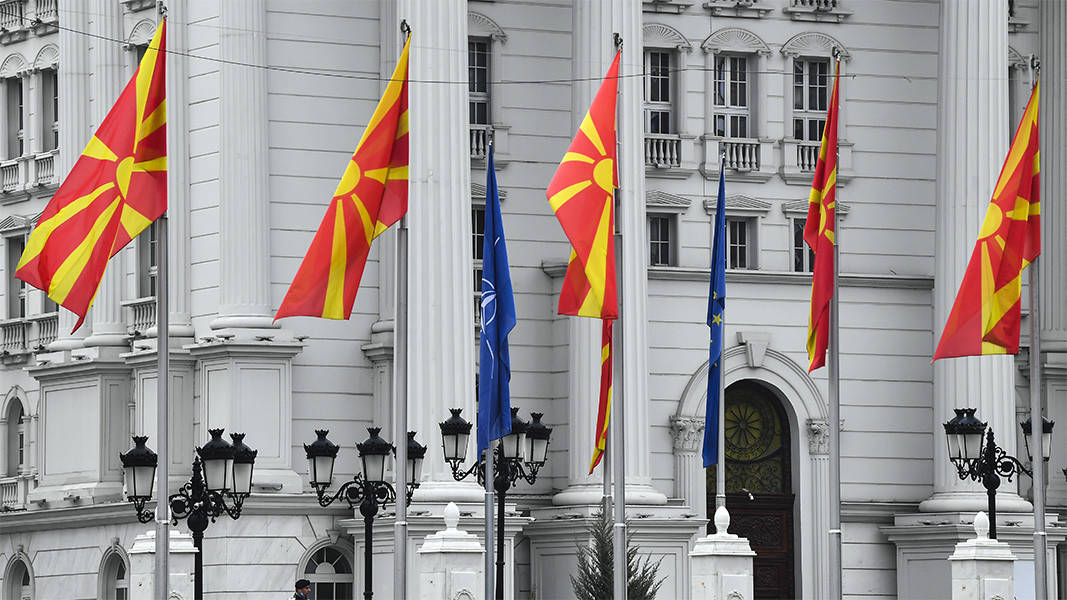
The government of North Macedonia has discussed and approved a proposal for constitutional changes, and has decided to submit the document to parliament. The amendments concern the addition of nationalities like Bulgarian, Croatian, Montenegrin, Slovenian to the constitution, which would pave the way for the country’s accession to the EU. They will be presented to the MPs on 18 August.
“I believe these to be constitutional changes that do not concern any identity issues. I trust our MPs will have the vision and the courage to make a decision which would mean European integration for the country, and most of all ensuring a better, European future for this and for the coming generations, said Prime Minister Dimitar Kovacevski, as quoted by BGNES. However, President Stevo Pendarovski is not optimistic that the constitutional changes will be endorsed, as the opposition VMRO-DPMNE would not support them.
Vucic asks NATO to protect Serbs in Kosovo 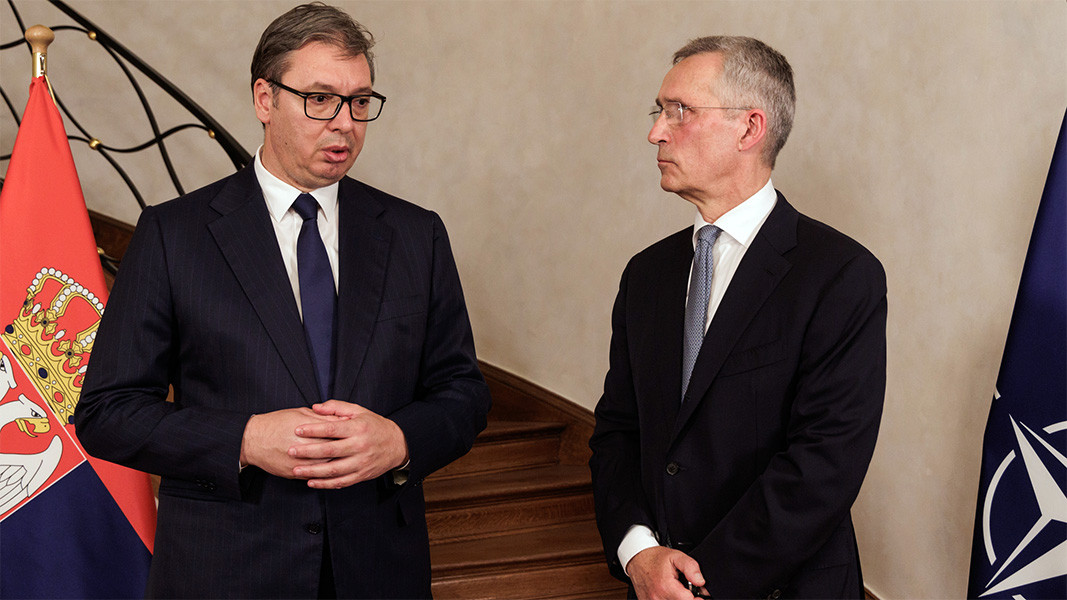
The President of Serbia Aleksandar Vucic has asked NATO to protect Serbs in Kosovo from the encroachments of the local authorities, whose conduct he described as “irresponsible”. In a joint statement with NATO Secretary General Jens Stoltenberg at the NATO headquarters in Brussels, he stated the conduct of the peacekeeping mission in Kosovo KFOR was “highly responsible”, and stressed that in accordance with a UN resolution, NATO was responsible for security in the former Serbian province, BNR’s correspondent in Brussels Anguelina Piskova reports. “We are asking you to ensure the safety and security of Serbs. no less than 6 Serbs have been killed by Albanians in the past 6 months, mostly by their security services. Fortunately, not a single Albanian has been shot dead or wounded seriously, which shows who is doing what,” Vucic said. On his part, Jens Stoltenberg called for a dialogue between Serbia and Kosovo, and for preventing any renewed escalation.
Turkey continues contacts for extending “grain corridor”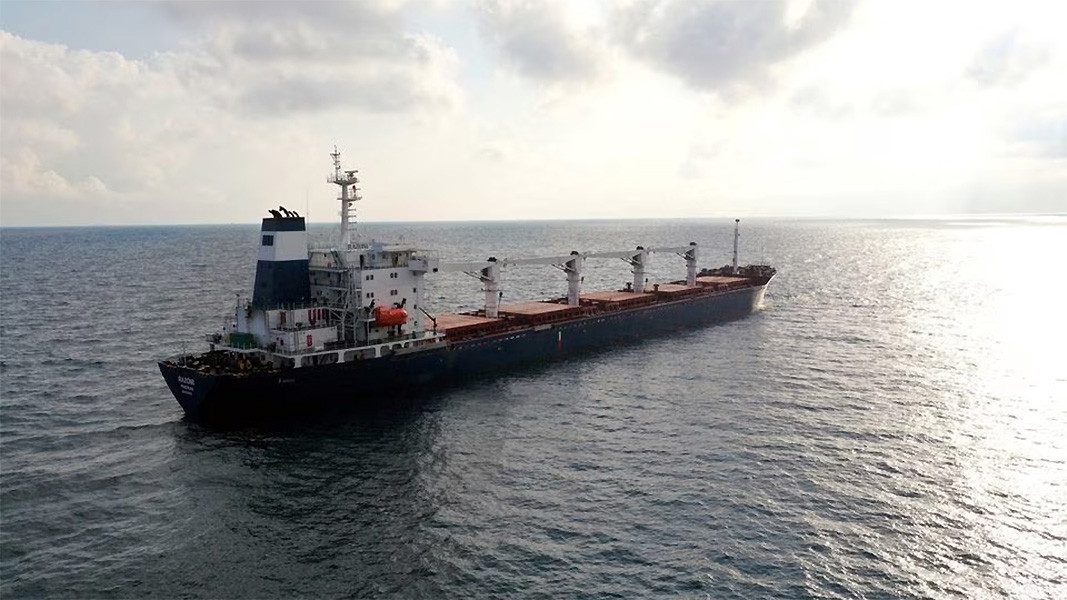
Turkey is continuing its contacts with representatives of the UN, Russia and Ukraine for extending the “grain deal”, which Russia exited after it expired on 17 July, the Turkish Ministry of Defence has announced, adding that the Russian staff have left the Joint Coordination Centre in Istanbul, the Bulgarian news agency BTA reports. “The Republic of Turkey, under the leadership of our president, will continue to make its contribution to ensuring peace in the region and humanitarian assistance, as it has done so far,” said Colonel Zeki Akturk, Press and Public Relations Counselor at the Turkish Defence Ministry. The grain deliveries were carried out in accordance with an agreement, signed in Istanbul on 22 July, 2022, between Turkey, the Russian Federation, Ukraine and the UN, envisaging a safe corridor for the export of grain and food from Ukrainian ports. Russia, which agreed to several extensions of the deal, has now exited the agreement, after it expired on 17 July, saying that its requirements had not been met and that there were obstacles in the way of its exports of grain and fertilizers.
Compiled by Miglena Ivanova
Translated and posted by Milena Daynova
Photos: EPA/BGNES, Reuters, nato.int
The election for parliament in the Republic of Moldova on 28 September, 2025 ended in a landslide victory for the ruling Party of Action and Solidarity (PAS). The result was seen by many as a validation of the country’s pro-European policy against the..
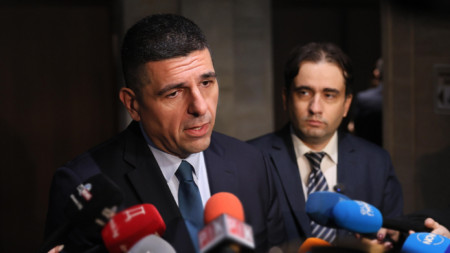
An emergency legal amendment has paved the way for the sale of Lukoil’s refinery in Burgas, opposition MP Ivaylo Mirchev, co-chair of Yes, Bulgaria, said on Wednesday. "Today, we have received confirmation that Lukoil has finally found a buyer for..
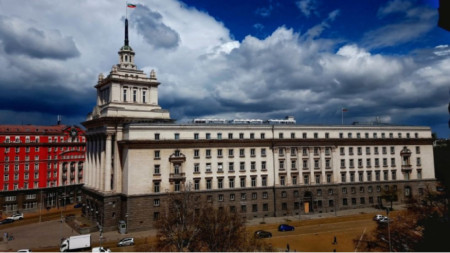
Last week, Bulgaria’s 51st National Assembly all but ground to a halt. On each of the three regular sitting days — Wednesday, Thursday, and Friday — parliament failed to reach the required quorum of 121 out of 220 deputies. On Friday, for instance, only..





 Mostly Cloudy
 Fog
Fog Cloudy
 Partly Cloudy
 Cloudy