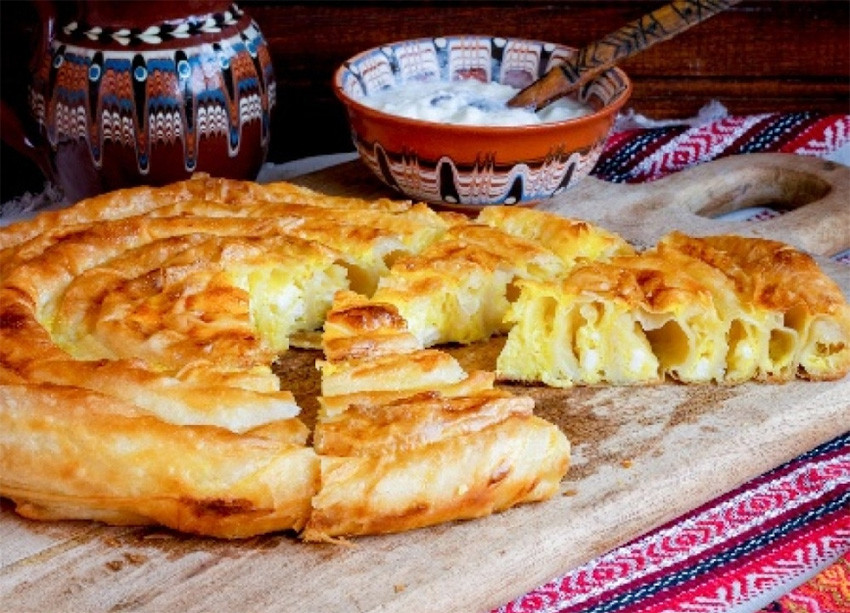
Cuisine and tourism go hand in hand in the world, a profitable mega-industry, sustaining whole sectors of the local economies. Delicious traditional food is an essential part of Bulgaria’s tourist product which is why the typical Bulgarian cuisine is popular with Bulgarians, but also with foreigners. “The richer a country’s history, the richer its cuisine,” says culinary expert Stefan Stefanov in an interview with Milena Vodenicharova from the BNR’s culture channel Hristo Botev, and adds:
“There is evidence going back to the 3rd-4th century BCE of what kind of food was eaten in our lands, then inhabited by the Thracians. They were mostly farmers and stockbreeders. Hunting was set aside for the rich and the nobility. In those times the different tribes grew wheat, spelt and also barley, rye and vriz (now known as rice). Our ancestors would store the food in underground rooms or cellars, where the food would keep longer.”
In 1870, when Bulgaria was still under Ottoman domination, the first Bulgarian cookbook was published by Petko Rachov Slaveykov. The book features recipes and ways of preparing food and drinks that have been part of the traditions and culture of Bulgarians through the ages. “Eating traditional Bulgarian food will help us stay healthy and keep our good looks,” Stefan Stefanov says and adds: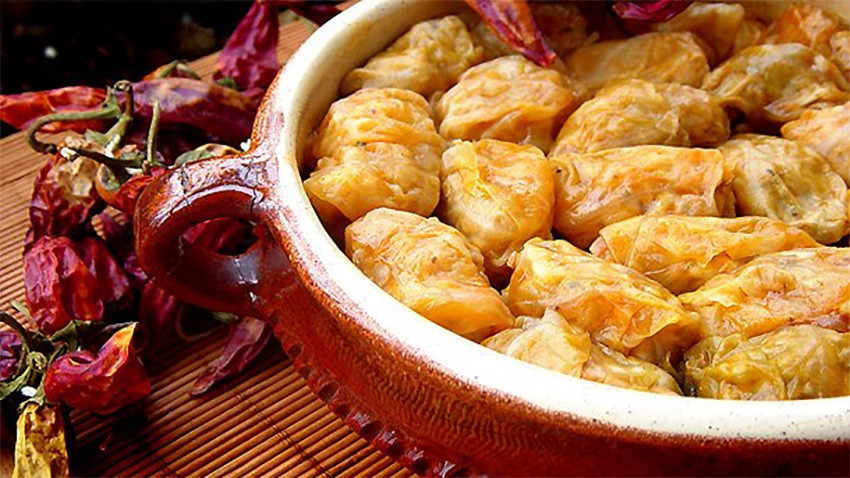
“Years ago the way we combined food resulted in the highest number of centenarians on the continent, and a long and full life,” Stefan Stefanov says. “Let me give you as an example our zelevi sarmi (whole sauerkraut leaves with different kinds of stuffing). They are good for the digestion because sour cabbage is a natural probiotic and reduces the risk of cancer. The antioxidants in sour cabbage and cabbage juice help eliminate free radicals which are thought to be one of the causes of cancer cells. Zelevi sarmi are also low-calorie food because of the balance between carbohydrates and fats. The same is true of other kinds of Bulgarian food as well.”
Alongside zelevi sarmi and moussaka other traditional Bulgarian food includes yogurt and banitsa - sweet or savory. Being part of the country’s national culinary heritage, they are made and eaten in many homes and restaurants. Stefan Stefanov and his colleagues have been scouring Bulgaria in search of old recipes, and they have found there are hundreds of different ways of making banitsa.
“Making banitsa can take 1 to 7 hours,” says Stefan Stefanov. And the kind of banitsa that is the most highly rated, but also the most difficult to make is… chicken banitsa: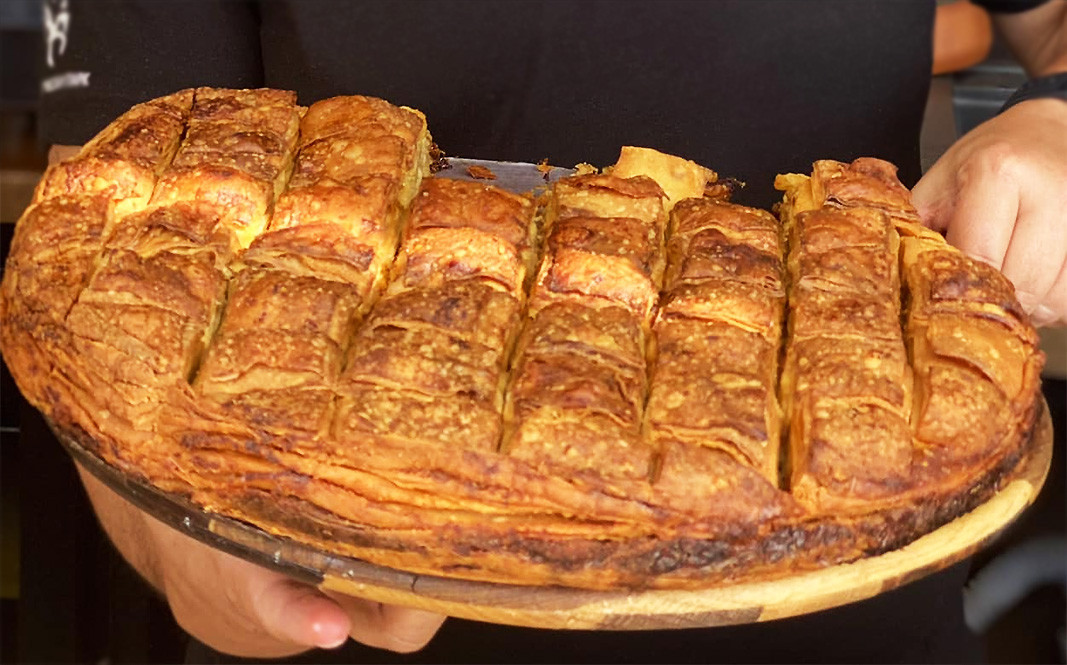
“It takes about 7 hours to make. The chicken is boiled, boned and cut up into little pieces. Filo pastry sheets are rolled – 25 in number, and the filling is layered between them,” Stefan Stefanov explains. “It takes over two and a half hours to bake, pouring chicken broth over it throughout. Another interesting banitsa is the traditional sweet banitsa from Glozhene. It is made with goat’s white cheese, but what makes it sweet is the special sugar syrup used while it bakes that gives it a unique sweet-savory balance,” Stefan Stefanov says in conclusion.
More:
Text by Veneta Nikolova
Translated and posted by Milena Daynova
Photos: Pixabay, Facebook /HistoricalPark.BG, archive
The Bulgarian minority in Romania marked a significant event with the official opening of the Bulgarian Inn in the village of Izvoarele (Hanul Bilgarilor), Teleorman County (Southern Romania)- a locality with Bulgarian roots dating back over 200 years...

The 14th edition of DiVino.Taste, Bulgaria’s leading forum for wines and winemakers, will take place from 28 to 30 November at the Inter Expo Centre in Sofia. Over 80 producers from all wine regions will participate, offering tastings of around 600 of the..
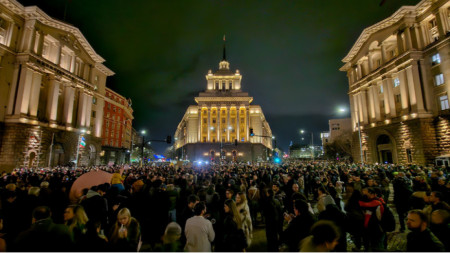
Minutes before the second and final reading, at the parliamentary budget and finance committee, of the state budget for 2026, the leader of the biggest party represented in parliament GERB Boyko Borissov halted the procedure and sent the draft bill..





 Rain / Snow
 Rain
Rain Snow
Snow Значителна облачност със сняг