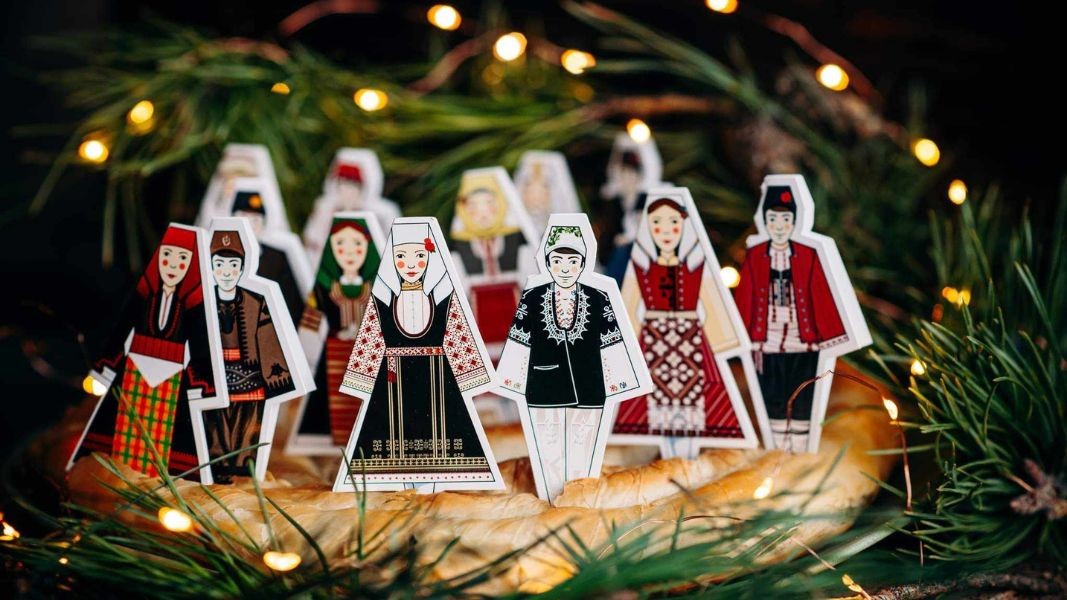
On New Year’s eve there is one thing all people in Bulgaria put on the table – banitsa with lucky charms. Banitsa is made of filo pastry with filling in between the pastry sheets made of cheese, eggs and butter. Different kinds of meat can be added to the filling, or leek, spinach etc. The banitsa is cut up into pieces and each member of the household gets a lucky charm for the coming year.
Once, women used cornel twigs with different numbers of buds, each signifying different kinds of “luck”, and tucked them in between the pastry sheets. As time went by the tradition changed - with lucky charms of all shapes and sizes, and made of different material signifying serious or jocular wishes. where they are placed has also changed – nowadays they are mostly simply stuck on top of the banitsa.
Young artist and designer Diana Mihova makes lucky charms with wishes for love, a new home, health, happiness etc. But she has chosen to make a very different kind of lucky charms. And as all good things, the idea came spontaneously: 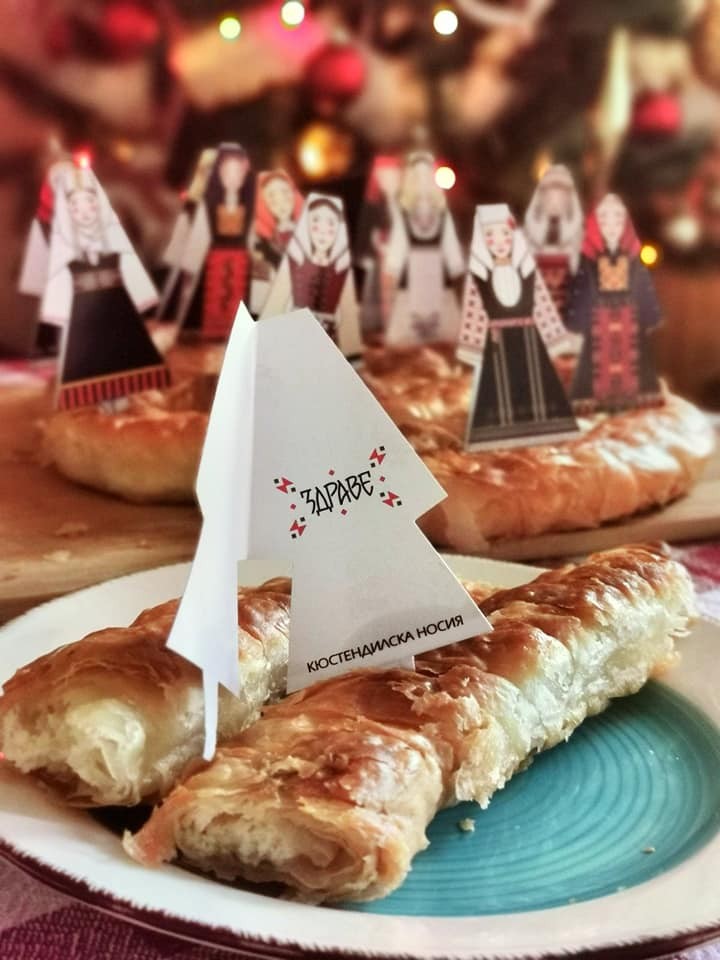
“It was my aunt’s idea – she does folk dancing, and she wanted to give her friends presents that are fun. She asked me to draw them but I am an artist and designer, so I couldn’t just sit down and do something like that. So, the first thing I did was to stylize them down to a simple shape, and then I vectorized them using a programme.”
Diana Mihova’s lucky charms are unorthodox, shaped as silhouettes depicting girls and boys clad in the traditional clothing of the different folklore regions of Bulgaria. And she decided to fashion them in this way for a reason: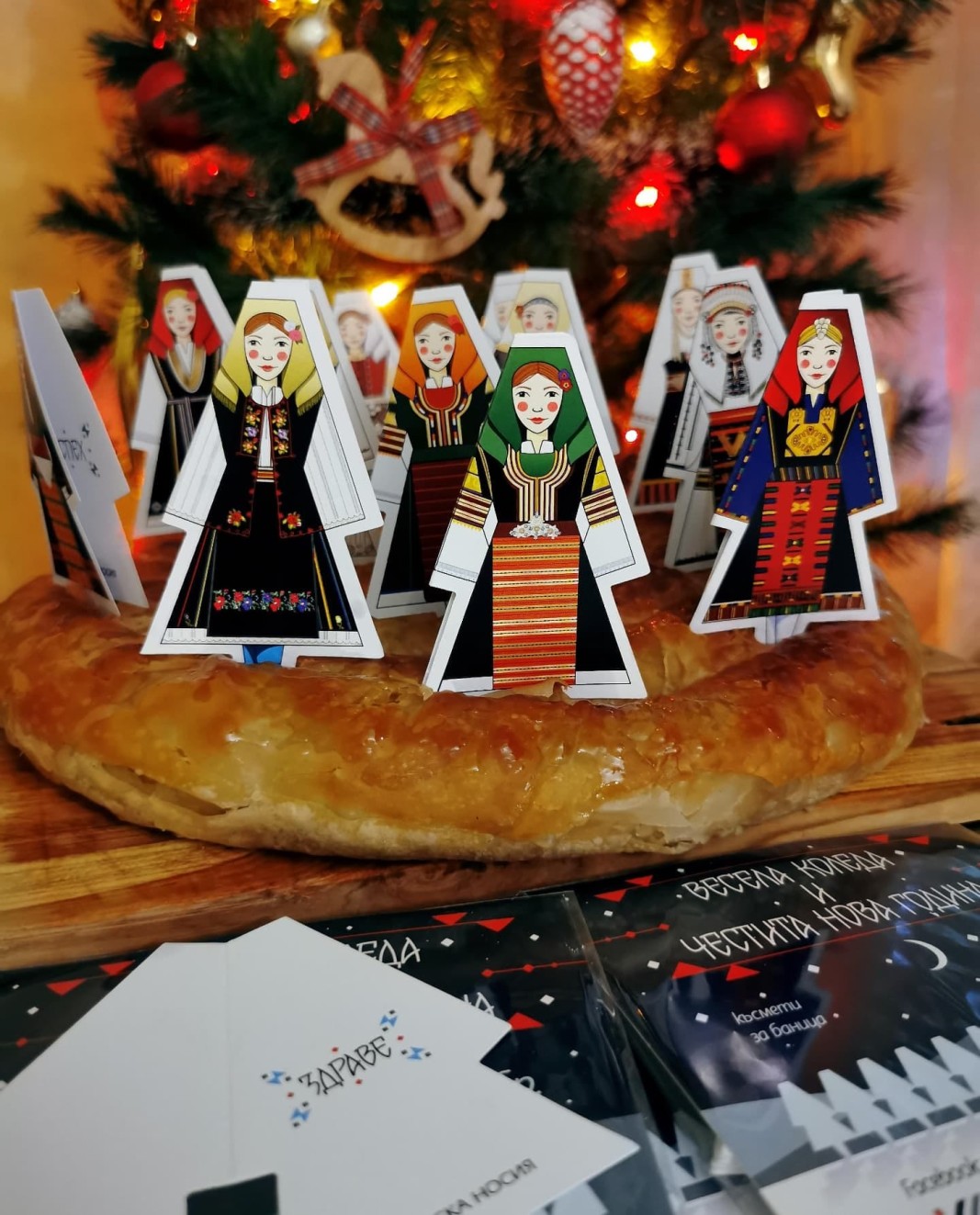
“It turns out there are a lot of people who have no idea what the authentic national costumes of the regions look like. I myself am an illustration of this – I used to have zero interest until I started making them myself,” Diana Mihova says in an interview with Radio Bulgaria. “I wanted them to be as authentic as possible. I would look at the original models, some more than 100 years old. I also consulted people who are competent in this field. And thanks to these lucky charms, I myself learnt a lot about the traditional clothing in Bulgaria, and I am very pleased about it.”
What proved most difficult was fashioning the backs of the figures. 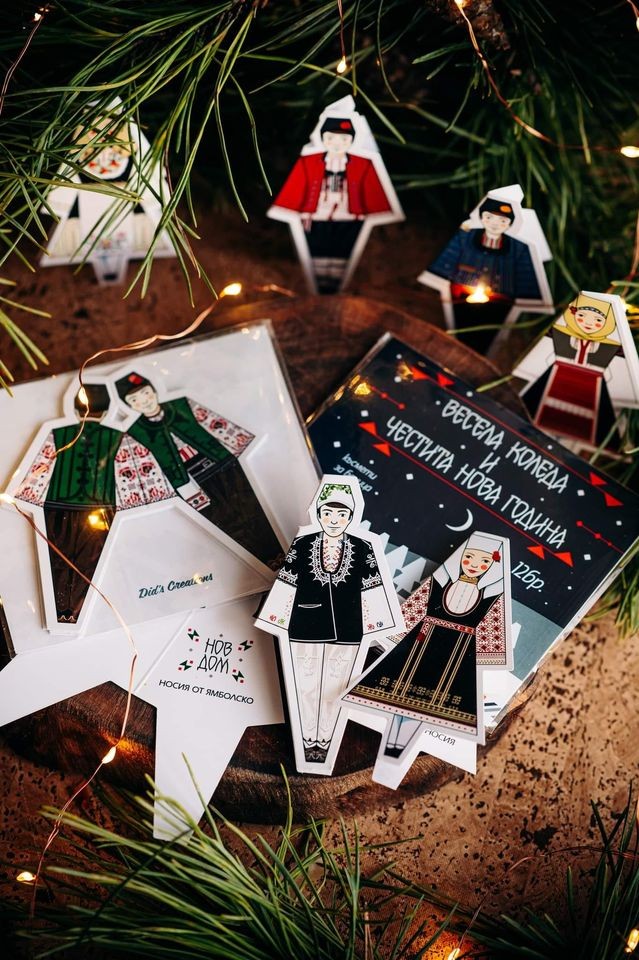
“We wanted everyone to be able to see the costume from the front and from behind. There aren’t many photographs online or in books, and for some elements I have used my imagination – looking at some photograph or model from the side and trying to imagine what it is like from behind, especially with men’s clothing. When I was making one of the male costumes I even called up a museum for more information because it is a matter of authenticity, not just photographs of clothes,” Diana says.
The result is stunning, with very realistic details. As a matter of fact, the 12 girls were made first, but then Diana Mihova thought to herself they would look lonely on the banitsa, so she created the male equivalents of the girl’s costumes. The font used to write the names of the costumes is also her own. 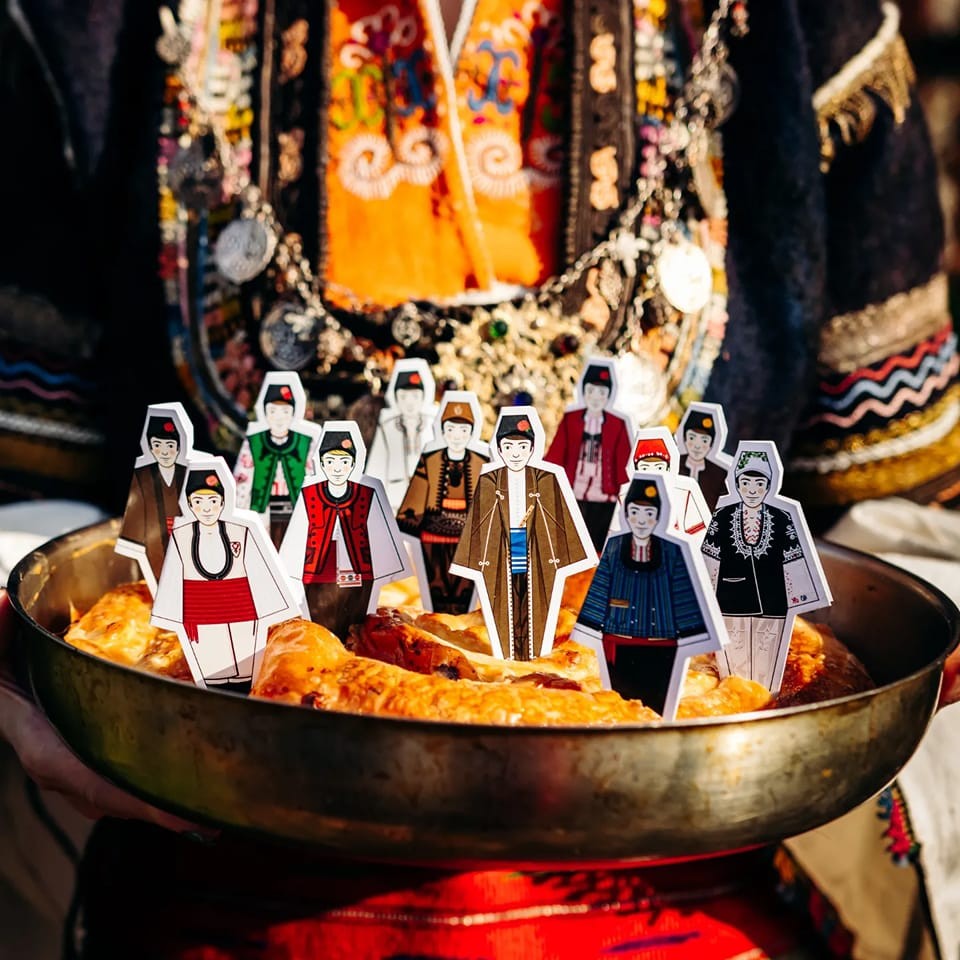
Translated and posted by Milena Daynova
Photos: Ivelina Cholakova

Bulgaria celebrates National Reading Day on the third Friday of November. The Reading Foundation is leading the initiative under the motto: “Read. For Real”. According to the OECD's PISA 2022 study, 53% of 15-year-old students in Bulgaria have..

On November 21–22, 2025, the 11th edition of the Career Fair will take place at the John Atanasov Hall in Sofia Tech Park. The forum aims to support early career orientation for young people in Bulgaria and is organized by the Bulgarian Global..
From fear and doubts to joy and support – Bulgarians react differently to the upcoming introduction of the euro on January 1, 2026. For some, it is a logical step towards Bulgaria’s integration into the EU with promises of stability..





 Mostly Cloudy
 Rain
Rain Scattered showers
 Cloudy
 Cloudy