Students block the entrances to the Radio and Television of Serbia

For 12 days now, students and citizens have been blocking the entrances to Serbia’s national radio and television broadcaster (RTS) in protest against how the state media is covering public discontent following the tragedy in Novi Sad. Students in Serbia have been protesting in various forms for several months after the collapse of the railway station’s canopy in Novi Sad on November 1, 2024, which claimed 16 lives. According to the protesters, the tragedy was the result of corrupt practices that led to poor-quality renovation work on the railway station.
The blockade of RTS, which began on April 14, has severely hampered the work of journalists, the public broadcaster reported. It has been forced to adjust its programming schedule but continues to air informational and cultural content. A few days ago, opposition MPs submitted a request to the Parliamentary Committee on Culture and Information to hold a new election for members of the Council of the Regulatory Authority for Electronic Media. Parliamentary Speaker Ana Brnabić announced that such a procedure would begin on Monday, April 28.
"Blocking RTS is a criminal offense under the Criminal Code- anyone who unauthorizedly prevents and interferes with the broadcasting of radio and television programs will be punished with a fine or imprisonment of up to one year", Brnabić said on TV Pink.
A 6.2 magnitude earthquake rattles Turkiye
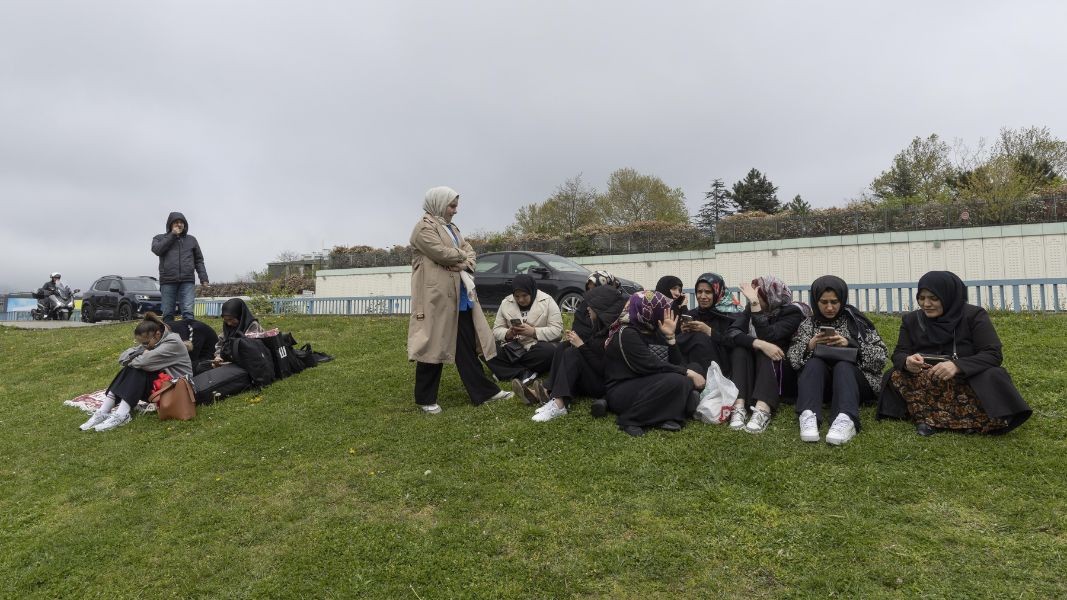
An earthquake measuring 6.2 on the Richter scale struck Western Turkiye on April 23. The epicenter was in the area of Istanbul and the Sea of Marmara. According to the National Institute of Geophysics, Geodesy and Geography at the Bulgarian Academy of Sciences, this is the strongest earthquake in the region in the past 10 years.
Hundreds of aftershocks were recorded following the main quake. There are no reports of fatalities as a result of the earthquake. Several buildings in Istanbul sustained minor damage, and no infrastructure damage has been reported. However, the earthquake caused widespread panic and over 150 people were injured trying to escape by jumping from buildings. More than 51,000 citizens requested shelter the night after the quake and were accommodated in local mosques, schools and dormitories, reported BTA.
The previous major earthquake in Turkiye occurred in 2023, with its epicenter in Kahramanmaraş in the southern part of the country. That quake had a magnitude of 7.7, resulting in over 53,000 deaths and more than 107,000 injuries.
Bosnian truck drivers threaten with blockades due to lack of government support

More than 500 trucks passed through the Bosnian capital Sarajevo on Monday, blowing horns in protest. They expressed their dissatisfaction with the lack of government support for the struggling transport sector, reported BTA. The drivers threatened to block border crossings if they do not receive understanding from the authorities.
Around 47,000 people in Bosnia and Herzegovina are employed in the transport sector. According to Velibor Peulić, chief coordinator of the consortium "Logistika", which unites about 600 companies, a key problem is the EU’s 90/180 rule which limits drivers' total stay in the Schengen Area to no more than 90 days in every 180 days. This forces many companies to re-register in Croatia and Slovenia, which are EU member states, and many Bosnian drivers are leaving the country. "We are not terrorists, we are just doing our job", said Peulić. The protesters are also demanding digitalization of the sector and shorter border procedures. If no agreement is reached by the end of the week, the drivers plan to block Bosnia and Herzegovina's borders on April 28.
A steam train ride in the Maramureș Mountains attracts tourists in Romania
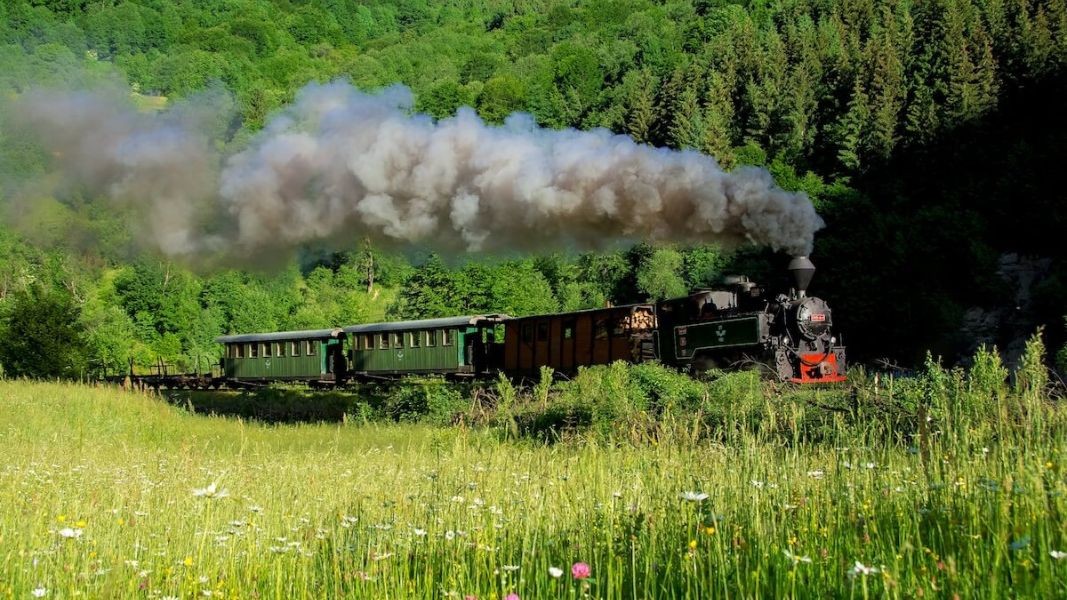
A steam train, powered by wood, attracts thousands of tourists to the Maramureș Mountains in the northern part of the country, reports BNT. The narrow-gauge train, built in 1932, is the last active forest railway in Romania and runs along a 46 km route through the Maramureș Nature Park. The old train gives passengers a glimpse into the past, allowing them to experience a journey similar to those of nearly a century ago, when the locomotive was first produced.
The steam train route begins at the Vișeul de Sus railway station, which has been operational since 1930. At the 21st kilometer, the train stops at Paltin station, where tourists have enough time for a picnic or a short hike before returning to the starting point. The railway line is used for transporting wood in Maramureș County and is located near the border with Ukraine.
Published and translated by Kostadin Atanasov
The Bulgarian minority in Romania marked a significant event with the official opening of the Bulgarian Inn in the village of Izvoarele (Hanul Bilgarilor), Teleorman County (Southern Romania)- a locality with Bulgarian roots dating back over 200 years...

The 14th edition of DiVino.Taste, Bulgaria’s leading forum for wines and winemakers, will take place from 28 to 30 November at the Inter Expo Centre in Sofia. Over 80 producers from all wine regions will participate, offering tastings of around 600 of the..

Minutes before the second and final reading, at the parliamentary budget and finance committee, of the state budget for 2026, the leader of the biggest party represented in parliament GERB Boyko Borissov halted the procedure and sent the draft bill..







 Cloudy
 Mostly Cloudy
 Snow
Snow Cloudy
 Rain / Snow