Enyovden (Midsummer's Day) is one of the most beloved holidays in the folk calendar of Bulgarians, which has deep roots in our traditions, thinking, and beliefs. It has a fixed date - always it is marked on June 24. It is also called St. John of the Summer, because on the same date the Orthodox Church honours the birth of St. John the Baptist.
According to popular belief, on Midsummer's Day the path of the sun from winter to summer ends and it takes the opposite course - from summer to winter. And on the night before the holiday the skies open, the stars descend to the earth and enchant grasses and flowers, giving them a healing power. The waters are also granted , because the sun bathes for the last time before it sets. That is why even today, in the early morning of Midsummer's Day, people ritually bathe in rivers and lakes.
The holiday was once accompanied by special songs for every moment of the practiced rituals and ceremonies - from gathering herbs in the early morning, to the singing of folk songs and the cheerful youth jokes at dusk.
More about them in Radio Bulgaria’s Editor’s picks.
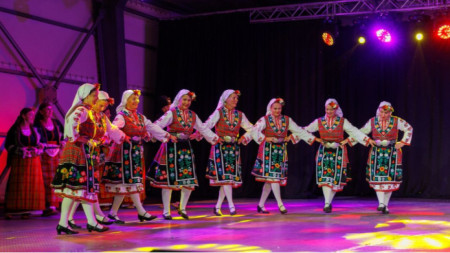
On 22 November, the Association of Bulgarian Folk Ensembles Abroad (ABFEA) will present its project, 'Online Catalogue of Bulgarian Horo and Other Dances', in three European cities: Lyon, Munich and Copenhagen. 'Our goal is to preserve Bulgarian..
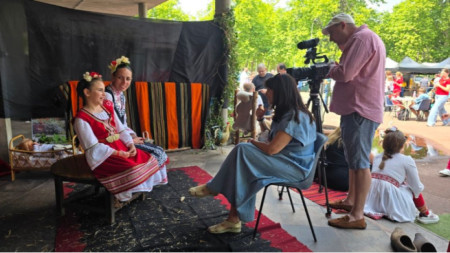
‘The Bulgarian horo is a kind of magic — an enchanted circle that pulses with the unique energy of our spirit, our traditions and our identity,’ says journalist Milena Milotinova, who recently presented her new documentary The Magic of the Bulgarian..
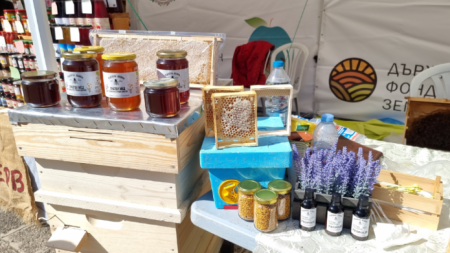
The Eastern Rhodopes come to life in the heart of Sofia – with authentic flavoуrs, music and craftsmanship . Residents of the Bulgaria capital have a chance to immerse themselves in the atmosphere of Momchilgrad Municipality and its cultural and natural..




 Overcast, rain
 Scattered showers
 Cloudy
 Mostly Cloudy
 Cloudy
 Partly cloudy, chance of rain