We said goodbye to 2020 with relief and a ray of hope. The Covid-19 pandemic is not only a warning, but also a chance for humanity to prepare for even more serious disasters, scientists warn.
Over the past year, humanity has made a huge leap in its development. During the lockdown introduced by the authorities to contain the spread of coronavirus infection, millions have moved into the virtual world and artificial intelligence has become a major factor in our daily lives. Internet, new applications in our smartphones, 3D organ printing, designer babies, smart cars… we already live in the future.
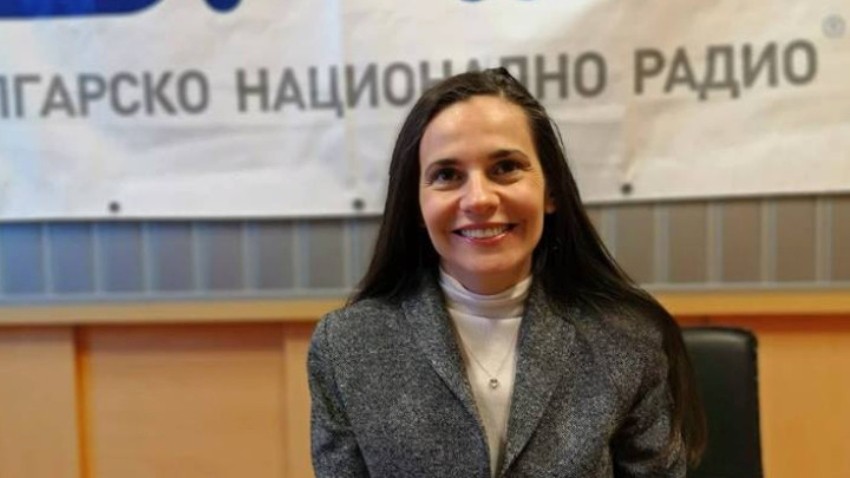
We fell into the trap of the so-called echo chambers, because social media and their algorithms offer us the content we are searching for. "Although we are swimming in a sea of information, the network provides us with selected information that reinforces our own conceptions. This practically deprives us of pluralism and contributes to the spread of false news and conspiracy theories," says Assoc. Prof. Dr. Mariana Todorova from the Bulgarian Academy of Sciences, who is the only futurist in Bulgaria.
It is difficult to predict the future. Events such as a meteorite strike, an alien encounter, earthquakes and others are unpredictable. However, they are able to make the destiny of humanity turn 180 degrees. Futurologists call them "black swans." However, the Covid-19 pandemic is not a "black swan".
Why is Covid-19 not a "black swan"?
Scientists have been warning of such a danger for years. According to them, we can expect an even more devastating infection in the near future: "Introducing and lifting lockdowns on a regular basis in an attempt to contain the spread of Covid-19 leads to long-term changes in the psyche. We are deprived of our most human experiences. Isolation, the advent of new technologies, the false feeling that we are everywhere and our lives are complete, but without feeling it with our bodies - travelling, communicating face to face with people, leads to traumatic stress", says Dr. Todorova.
Artificial intelligence is about to affect our human nature.
In 2020, Elon Musk's company made first attempts to merge the human brain with artificial intelligence. Are we approaching the moment when humans will merge with machines and they will start controlling us?
"The projects that are currently being developed aim to reach a common, super artificial intelligence," explains Mariana Todorova." An intelligence that would develop its own thinking and become an autonomous entity competing with humans. This is the so-called technological singularity - a hypothetical point in time at which technological growth becomes uncontrollable and irreversible. Scientists say this will happen by 2040-2050".
In the near future, the main dilemma for humanity will be of a purely ethical and philosophical nature.
“We are trying to create an entity like us that has not evolved and is not of biological nature. Now is the time to decide whether to develop artificial intelligence as a complex of services in medicine, education, employment and space sciences. It is better to limit the work on creating an intelligence similar to us. Otherwise, we would not be able to control the situation," Associate Professor Dr. Mariana Todorova says in conclusion.
English version: Kostadin Atanasov
Photos: Pixabay
Bulgaria celebrates National Reading Day on the third Friday of November. The Reading Foundation is leading the initiative under the motto: “Read. For Real”. According to the OECD's PISA 2022 study, 53% of 15-year-old students in Bulgaria have..
On November 21–22, 2025, the 11th edition of the Career Fair will take place at the John Atanasov Hall in Sofia Tech Park. The forum aims to support early career orientation for young people in Bulgaria and is organized by the Bulgarian Global..
From fear and doubts to joy and support – Bulgarians react differently to the upcoming introduction of the euro on January 1, 2026. For some, it is a logical step towards Bulgaria’s integration into the EU with promises of stability..







 Mostly Cloudy
 Cloudy
 Cloudy
 Scattered showers