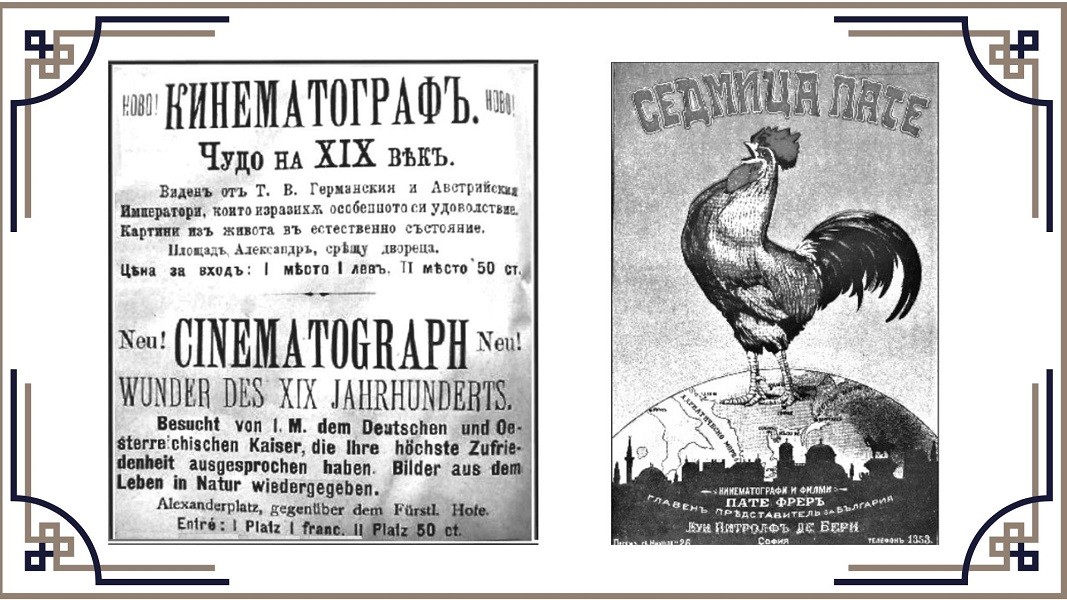
The night was frosty on December 8, 1896. In the warm lounge of the Macedonia Hotel in Sofia, the audience is quiet. A hypnotic séance is taking place. The hypnotist is a certain prof. Mellinson, a self-proclaimed "physics professor". The mysterious foreigner had arrived in Sofia in October of that year, and his series of spiritualistic and hypnotic séances were among the most talked about topics in society at the time. The séance ended and the mysterious professor demonstrated a new, quite genuine miracle - for the first time in Bulgaria - the "moving photography". The amazed spectators were left speechless.
"Later, Professor Mellinson made one more show with the cinematograph on 10-11 December at the Bulgaria Hotel, opposite the Royal Palace. The event was covered by the press. I was surprised when I came across these reports because until then, for more than half a century, we were convinced that the first cinema screening in Bulgaria took place in Ruse in 1897. It turns out, however, that a few months before that Sofia was the first city to be illuminated by the beams of the cinematograph," says art historian Dr. Petar Kardzhilov. Together with Assoc. Prof. Dr. Irina Kitova and Zornitsa Krasteva, he is the author of the recently published the volume Chronicles of Silent Cinema in Sofia (1896-1933) with engaging texts and over 700 photographs, facsimiles and drawings recounting the dawn of Bulgarian cinematography.

In December 1896, a film shot in the port of Varna was shown in Bulgaria. Besides being the first film made in Bulgaria, it was also the first to be filmed on the Balkan Peninsula. It must have been produced either in the summer or at the latest in the early autumn of 1896 in order to be shown in Sofia at the beginning of December", concludes Peter Kardjilov.
At the beginning of the twentieth century, the first large mobile cinemas similar to modern circuses arrived in Bulgaria. They were huge tents stretched over elaborate wooden structures. At that time, cinema was like today's television - the highlight of the programme were documentary chronicles of world events, such as the Russo-Japanese War of 1904-2005.

"The owners of the first permanent cinemas in the country decided to shoot films themselves and no longer rely only on foreigners who come, shoot short newsreels and leave," says Peter Kardzhilov. Thus, in 1908-9, the first native chronicles were filmed in Bulgaria.
The turning point for Bulgarian cinema came in 1914.

"On the verge of the First World War, the management of the Modern Theatre in Sofia gathered and decided to make the first Bulgarian feature film "Bulgaran is Gallant" (1915). The lead role in the film comedy was played by Vasil Gendov - then a young actor who later became the director of 10 more feature films. This is how the foundations of Bulgarian cinematography were laid, and Gendov and his wife Zhana Gendova emerged as the stars of Bulgarian silent cinema," says Peter Kardjilov in conclusion.
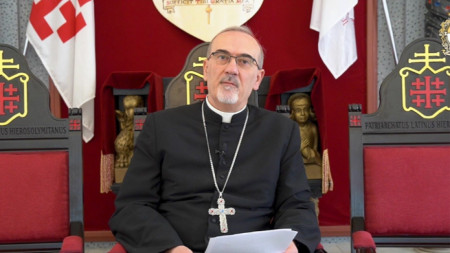
On 12 November at 5:30 p.m., Cardinal Pierbattista Pizzaballa, Latin Patriarch of Jerusalem, will give a lecture in the Marin Drinov Hall of the Bulgarian Academy of Sciences, at the invitation of the corresponding member of the Pontifical Committee for..

To mark the 65th anniversary of the Cuban animation studio Instituto Cubano del Arte e Industria Cinematográficos (ICAIC), Bulgarian director Andrey Hadjivasilev conducted a film workshop with students in Havana, the Bulgarian Embassy in Havana..
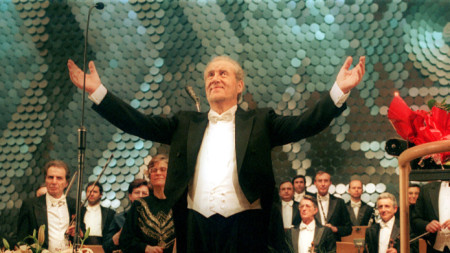
On this day five years ago (in 2020), a memorial plaque dedicated to the world-renowned Bulgarian bass Nicolai Ghiaurov (1929–2004) was unveiled in Modena. It was in this Italian city that the celebrated opera singer lived and worked from 1981 until his..






 Partly Cloudy
 Mostly Cloudy