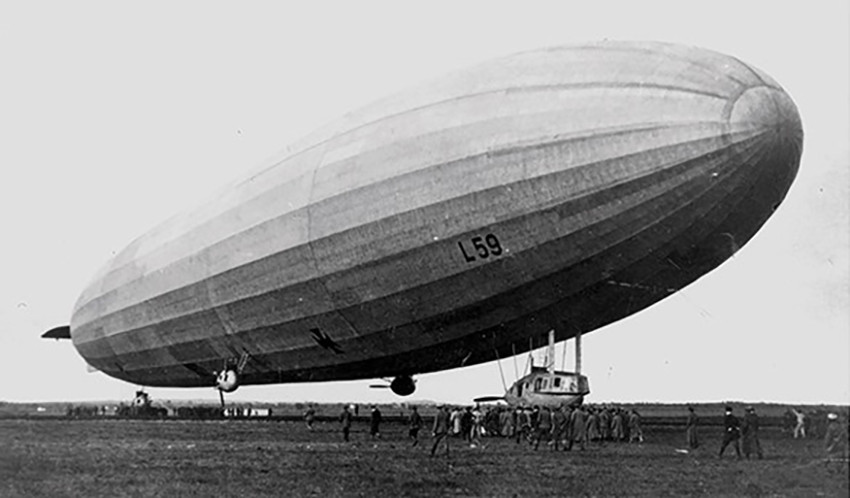
One frosty November morning in 1917, as World War I was raging, a Zeppelin L 59 took off from the air base near Yambol bound for Tanzania. The purpose of the flight was to deliver ammunition and materials to the German military units in a remote wilderness. The zeppelin successfully overflew the Aegean and the Mediterranean, then the desert in Africa, reaching a speed of 103 kilometres per hour. But as it approached Khartoum in Sudan it was recalled to the German command base because of disinformation from the enemy forces. During the flight, the 23-member crew did not use any maps, flying “by intuition” and most of the time had no contact with Berlin. Even though it was a tactical failure, the secret mission was to gain legendary status, going down in history for its record-breaking duration of almost 96 hours and a distance of over 6.800 kms.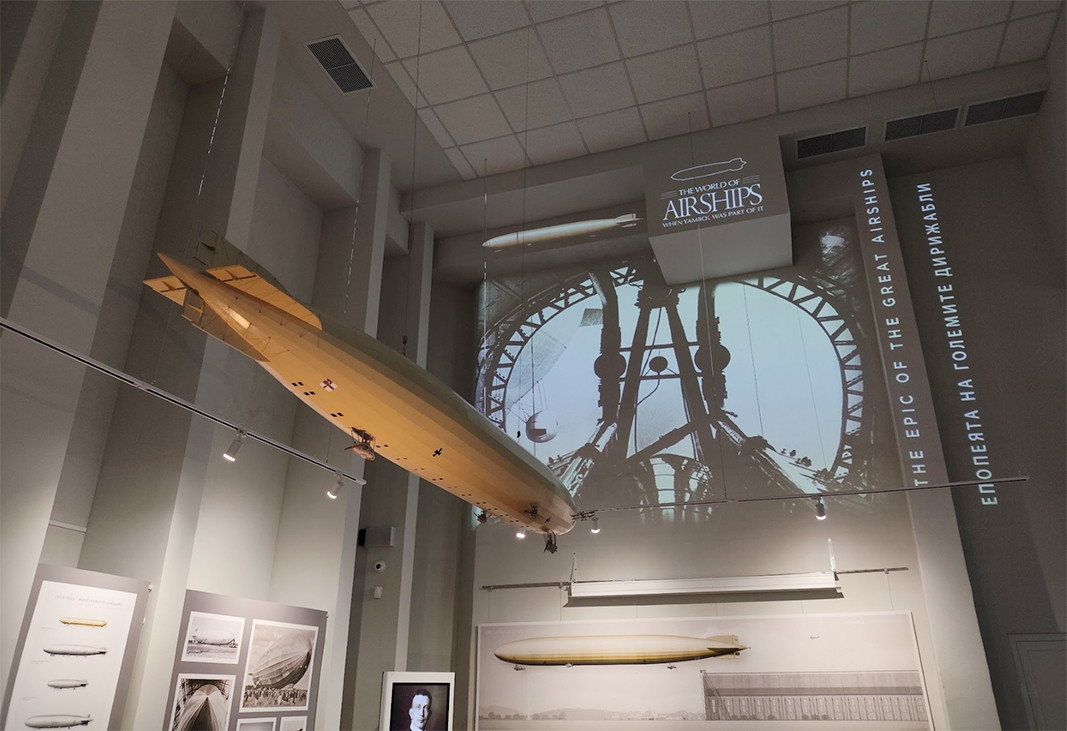
These and other fascinating facts connected with the epic flight of the L 59 and the history of zeppelins are part of a multimedia photographic exhibition “The world of airships: When Yambol was part of it”, arranged at the Regional Museum of History in Yambol. The exhibition is based on the book Airships-designed for greatness by Prof. Massimiliano Pinucci, himself a designer and amateur pilot, and curator of the exposition. Visitors can also see a small-scale 1:100 model of the legendary Zeppelin L 59.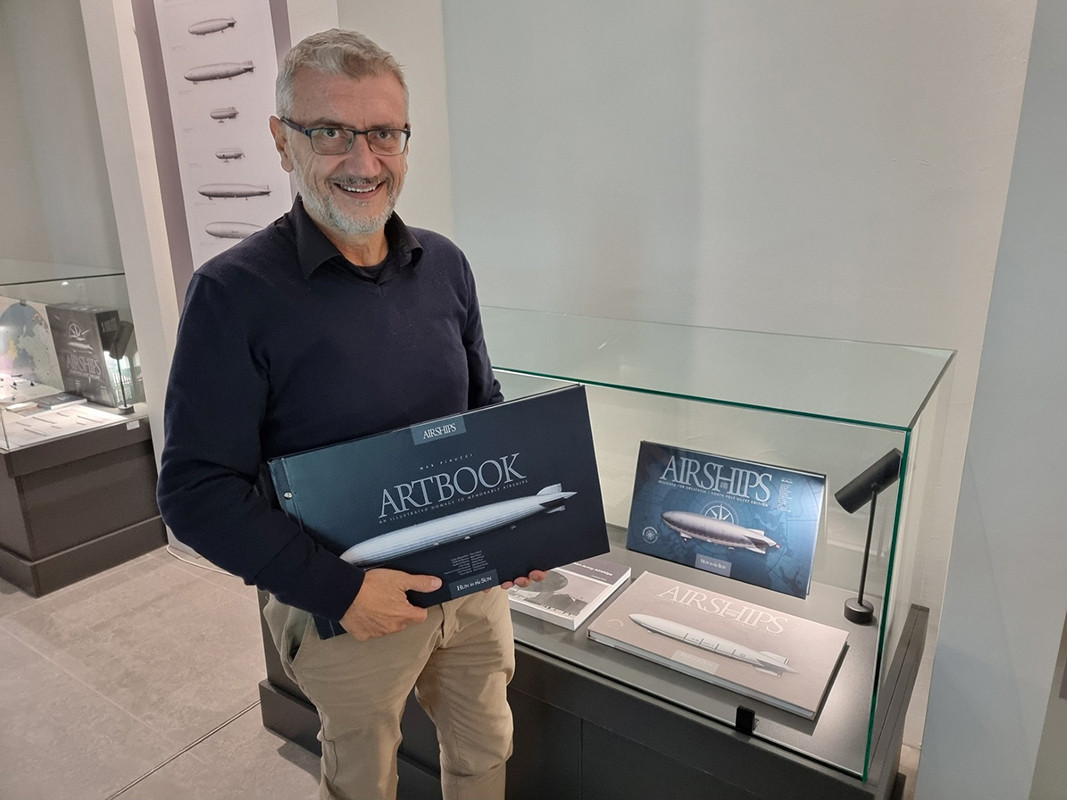
In an interview with Radio Bulgaria, Prof. Massimiliano Pinucci admits that, as a child, he read a book about L 59, from the 1930s, belonging to his grandmother and that he has been enthralled by the magic of zeppelins ever since. The long years of research work resulted in a book and an exhibition about the sky giants of the 20th century. The exhibition was first shown in 2018 in Trieste. “Last year I went to Yambol and I fell in love with it. That was when I first set foot on the floor of the zeppelin hangar built in the town’s environs,” says Prof. Pinucci and goes on: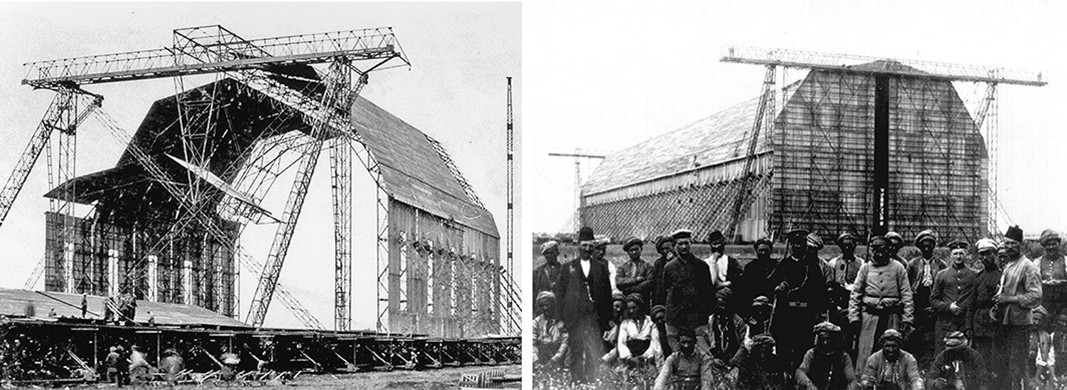
“That was how the idea came into being to continue with a project that will use the content of the 2018 exhibition, but with new drawings and tables added in the special section dedicated to the Yambol zeppelins. During World War I there were three of them, though we highlight the last one – the L 59 which carried out this legendary flight. It is a record flight that lasted more than 95 hours non-stop and without refueling and which remained the longest human flight in the course of 40 whole years!”
Prof. Pinucci says that for aviation, these 40 years are like 400 in ordinary life. Because in these 4 decades, humans went from small airplanes made out of wood and fabric to aircraft which fly at up to double the speed of sound.
“The mission of the L 59 was a romantic adventure that seems to bring light to the dark years of the war,” says Prof. Pinucci and goes on: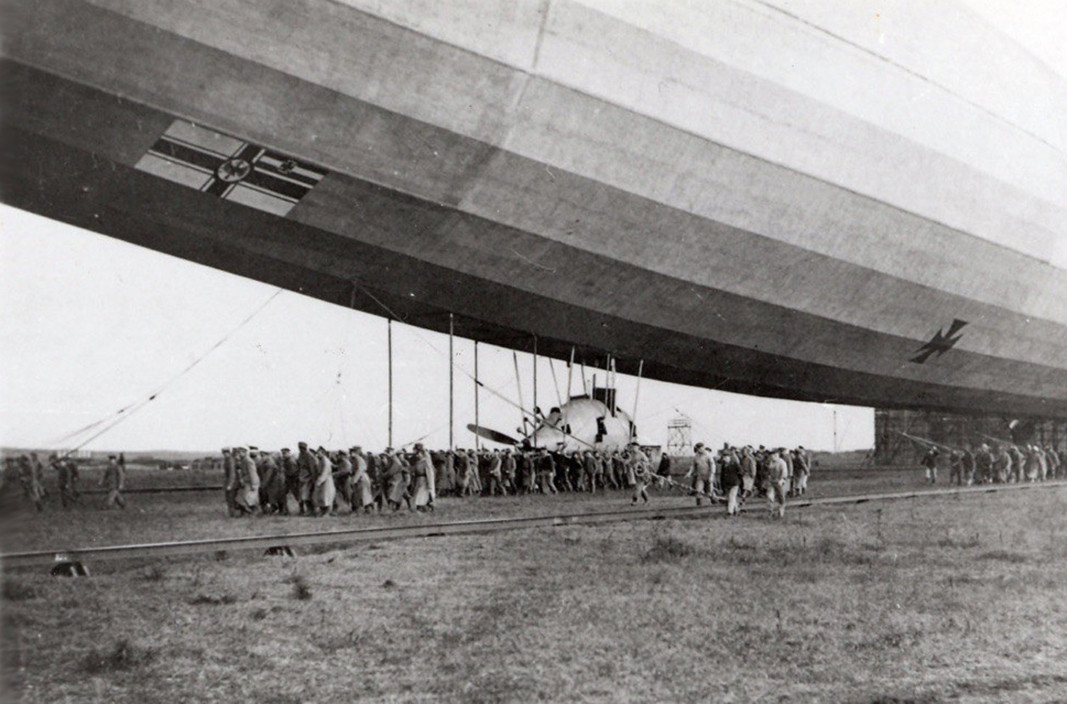
“Because it was not a military mission, it was a rescue operation. The mission was not to drop bombs, but to transport cargo. Imagine, it is like making a delivery for a space mission in our day from Yambol, and, for the purpose, building an air base and a gigantic rocket in Yambol, and then launching it into outer space.”
After its return from Africa, the zeppelin carried out several reconnaissance missions to other parts on the planet. But on 7 April, 1918, after taking off from Yambol, the L 59 was destroyed near Malta under mysterious circumstances. Nevertheless, its unprecedented achievement brought about a revolutionary change in engineering in the early 20th century. 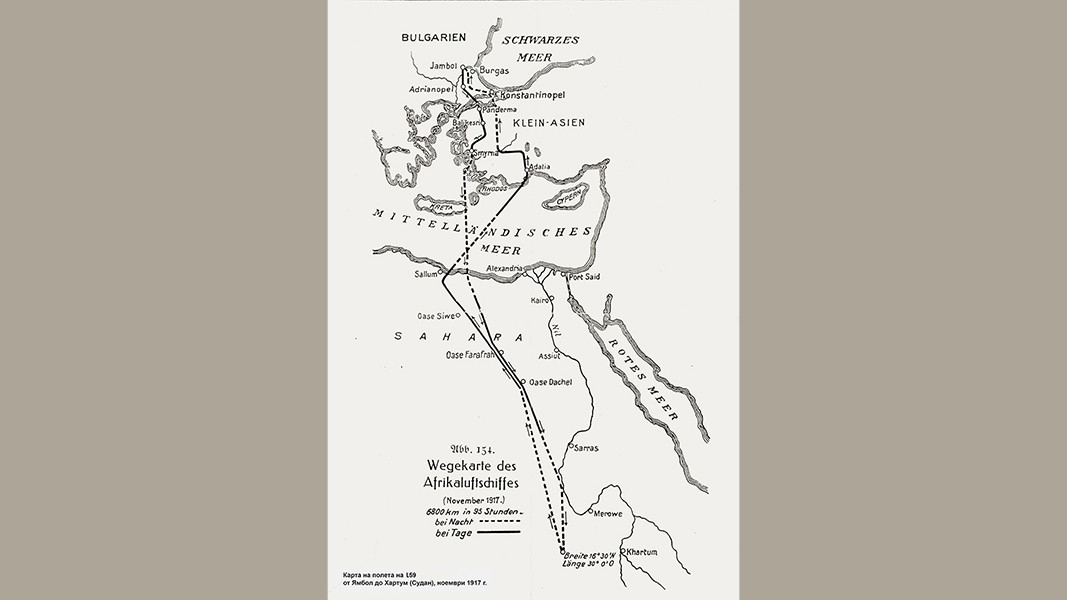
“The two-way flight of the L 59 to the borders of Kenya, and all the way to Sudan and back is comparable to the distance between Yambol in Bulgaria and Miami – about 6,800 kms. by air, a truly impressive achievement! This record-breaking flight has been studied very meticulously by managers and entrepreneurs in the industry interested in finding out more about the potential of using zeppelins for long-distance trans-oceanic flights,” says Prof. Massimiliano Pinucci in conclusion.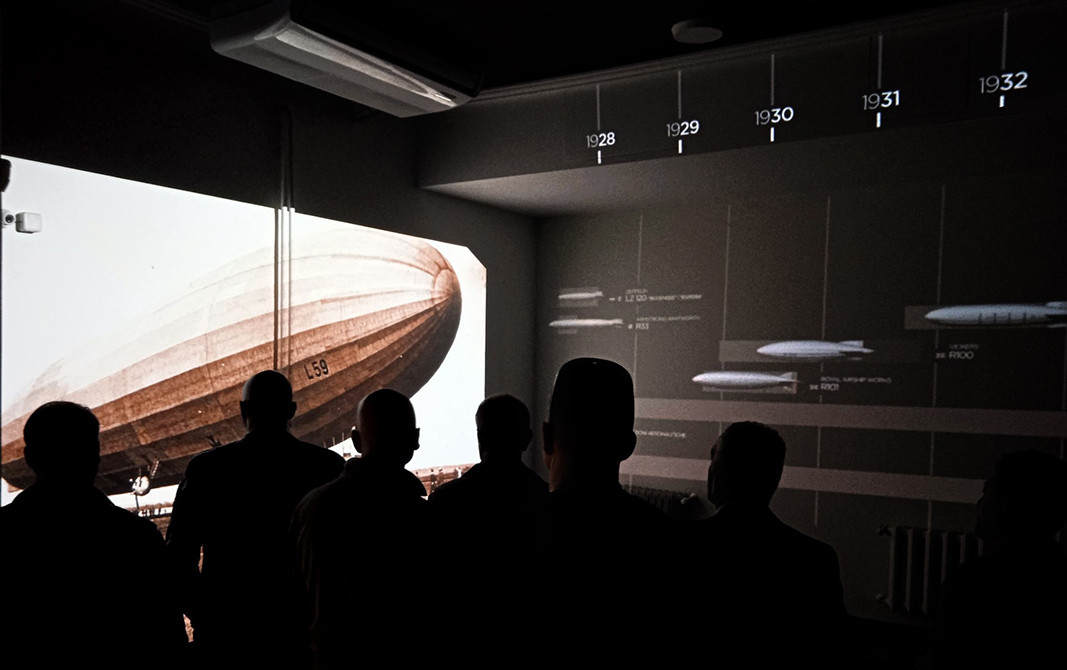
The exposition will be open to the public at the Regional Museum of History in Yambol until 28 February, 2025, and, as of March, will be on display at the National Museum of History in Sofia.
More:
Translated and posted by Milena Daynova
Photos: Regional Museum of History-Yambol, Massimiliano Pinucci
In the world of the Thracians, who had no written language, the most important messages were conveyed through art. The Letnitsa Treasure is precisely such a message — about power, beliefs, and the path to wisdom . This unique discovery, dated between..
On November 21, the day of the Presentation of Virgin Mary (or the Entry of the most Holy Theotokos into the Temple), the Orthodox Bulgarians also celebrate the Day of the Christian Family and the Learning Youth. The holiday was established by the..

During a visit by the Radio Bulgaria team to the Bulgarian Orthodox Parish "Nativity of the Mother of God" in Geneva, we had the pleasure of meeting Ventseslav Sabev, the son of long-time church history professor at the Sofia Theological Seminary,..






 Mostly Cloudy
 Cloudy
 Cloudy
 Scattered showers