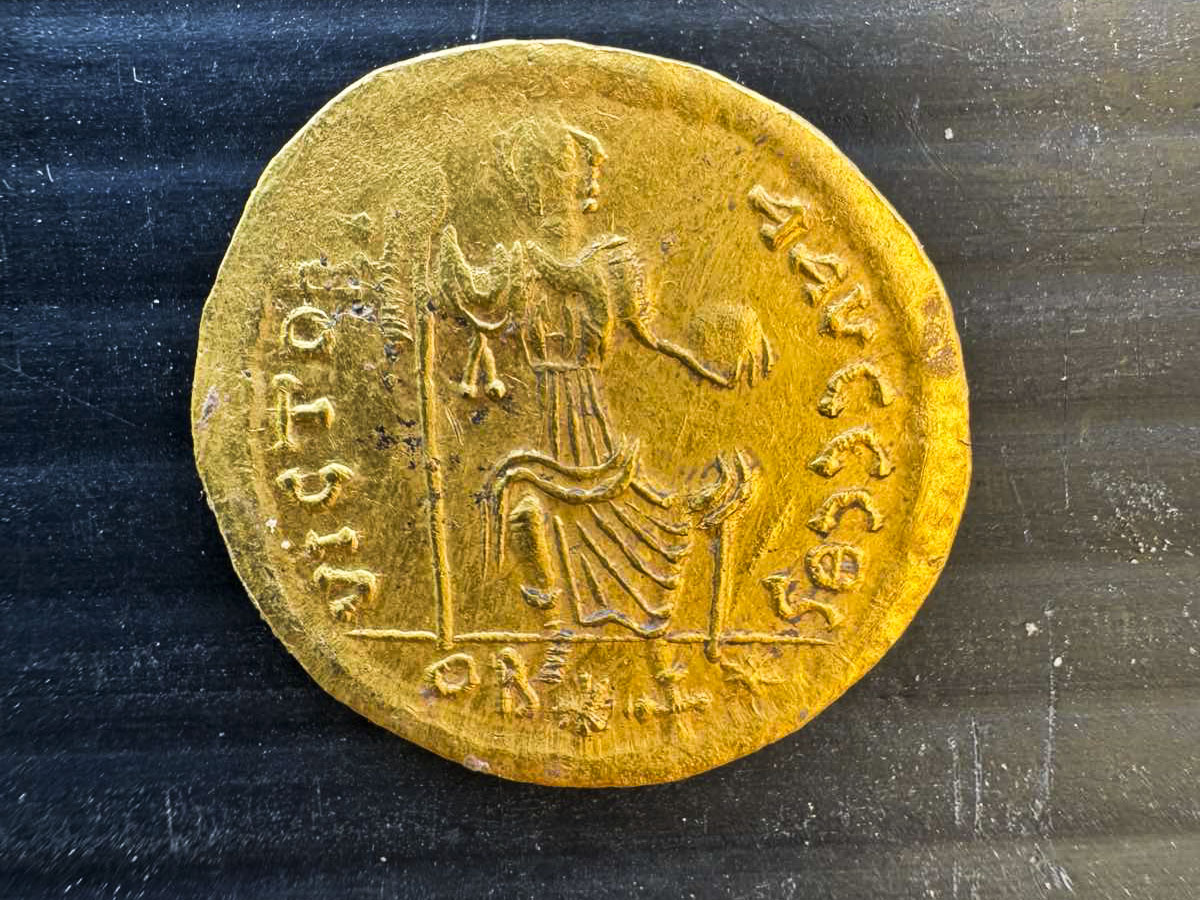
A gold coin minted during the reign of Emperor Justinian I, ruler of the Eastern Roman Empire, was discovered during excavations at the Tuida Fortress near Sliven. According to Associate Professor Dr. Nikolay Sirakov, Director of the Regional History Museum in Sliven, the discovery of a gold coin indicates that wealthy people lived in the fortress. Such coins were not used for trade but were symbols of prestige and investment, which is why they are rarely found.
This is the fourth such coin found in the fortress over the years. A total of 23 coins have been found this season, most of which are bronze and date from the 2nd–3rd century up to the 12th century. Belt fittings, a buckle, and even a book clasp have also been discovered, which, according to Associate Professor Sirakov, indicates that there was likely a scriptorium where books were written.
This year, excavations at Tuida are focused on a complex of residential buildings constructed with massive stone walls, dating from the 5th to the 12th century. The archaeological work is supported by the Ministry of Culture.
Edited by Darina GrigorovaPublished and translated by Kostadin Atanasov
Photo: BTA

The newest exhibition at the National Museum of Military History in Sofia, 'War and the Creatives: A Journey Through Darkness' opens today, offering free entry as a gesture to those who were unable to visit during the recent renovations. Rather than..
A 5,000-year-long history lies hidden in the ruins of the medieval fortress “Ryahovets” near the town of Gorna Oryahovitsa where active excavations began ten years ago. On this occasion, on November 17, the Historical Museum in Gorna Oryahovitsa..
Just days ago, archaeologists uncovered part of the complex underground infrastructure that once served the Roman baths of Ratiaria - one of the most important ancient cities in Bulgaria’s northwest. Founded in the 1st century in the area of..








 Mostly Cloudy
 Fog
Fog Partly Cloudy
 Cloudy