
They call them NEET - young people aged 16 to 29 who are Not in Education, Employment or Training. This is a group that has been growing across Europe, something that has been registered in Eurostat reports.
In Bulgaria, the picture is a bit more complicated, however, due to the demographic decline and the durable grey economy sector. Studies show that the share of unemployed among young people in Bulgaria is significant. Some of them avoid the labour market and education intentionally, continuing to live with their parents and relying on their financial support. Others are not happy with what the labour market has to offer.

“Overall, there is a drop in employment across the country, and not just among the young, because of the negative population growth, emigration and other factors,” says Plamen Robov from the Bulgarian Employment Confederation and adds:
“There are specific reasons typical of this concrete group. One of them – and the one that is most interesting – is the drop in young people’s interest in working on an employment contract. The new generation lean much more towards flexible forms of employment – freelance, contracted work, projects etc. This kind of work is growing more and more popular with the young and vice versa – a classical work contract job is growing less and less attractive.”
This change in attitudes is no whim, and reflects the fundamental change in values and the outlook on life of the new generation. The young are not just looking for a job, they are looking for a way of life that will give them autonomy and balance. This, however, is a serious challenge to the Bulgarian economic model which is still very much dependent on traditional employment forms in sectors such as industry, services and others which require a physical presence. Statistical data speak for themselves:

“Let us say there are 120,000 – 150,000 people under 29 who are nowhere to be found officially – i.e. they neither study nor work,” Plamen Robov says. “Of course, another major reason which is having an effect is the grey sector. Quite a lot of these young people do work in one form or another but that is not registered officially, i.e. they are in the grey economy sector. On a larger scale, statistics show that there are around one million Bulgarians who neither work nor study, which means they are not contributing to the economy in any way.”
Nowadays fewer and fewer young people are opting for the crafts as a profession, a job that requires a constant physical presence – at the factory, the office or on site. The reason for this is simple: 9 to 5 job offers no flexibility. But what is attractive? Everything that gives more freedom and remote work – IT, outsourcing, digital marketing, online content etc. Companies must adapt, Robov says, and offer more flexibility, and the new generation must bring down its expectations:

“I believe there is a lot to be done on both sides to make the process run more smoothly. From the point of view of the employers – they should make their structure more effective internally, so as to be able to offer more competitive wages, and the work process – flexible enough so as to be able to attract the young. On the other hand, young people nowadays have unrealistic expectations. They are constantly seeing online content showing brilliant careers that seem really easy and well-paid. In reality, however, if you are 20 or 30, a diploma and knowledge of the English language are not a guarantee of high pay. To receive a high salary takes more than university knowledge, it takes time, effort and practice. That is why these people should take their expectations down a notch and be more patient, invest in themselves and regard their career and their relations with employers in the long term,” says in conclusion Plamen Robov in an interview with Radio Bulgaria.
More:
Translated and posted by Milena Daynova
Photos: Pexels, pixabay

The Bulgarian minority in Romania marked a significant event with the official opening of the Bulgarian Inn in the village of Izvoarele (Hanul Bilgarilor), Teleorman County (Southern Romania)- a locality with Bulgarian roots dating back over 200 years...

The 14th edition of DiVino.Taste, Bulgaria’s leading forum for wines and winemakers, will take place from 28 to 30 November at the Inter Expo Centre in Sofia. Over 80 producers from all wine regions will participate, offering tastings of around 600 of the..
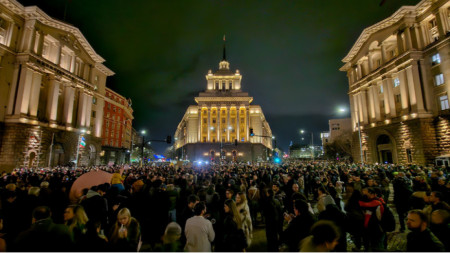
Minutes before the second and final reading, at the parliamentary budget and finance committee, of the state budget for 2026, the leader of the biggest party represented in parliament GERB Boyko Borissov halted the procedure and sent the draft bill..






 Cloudy
 Mostly Cloudy
 Partly Cloudy
 Fog
Fog