Podcast in English
Text size
Bulgarian National Radio © 2025 All Rights Reserved

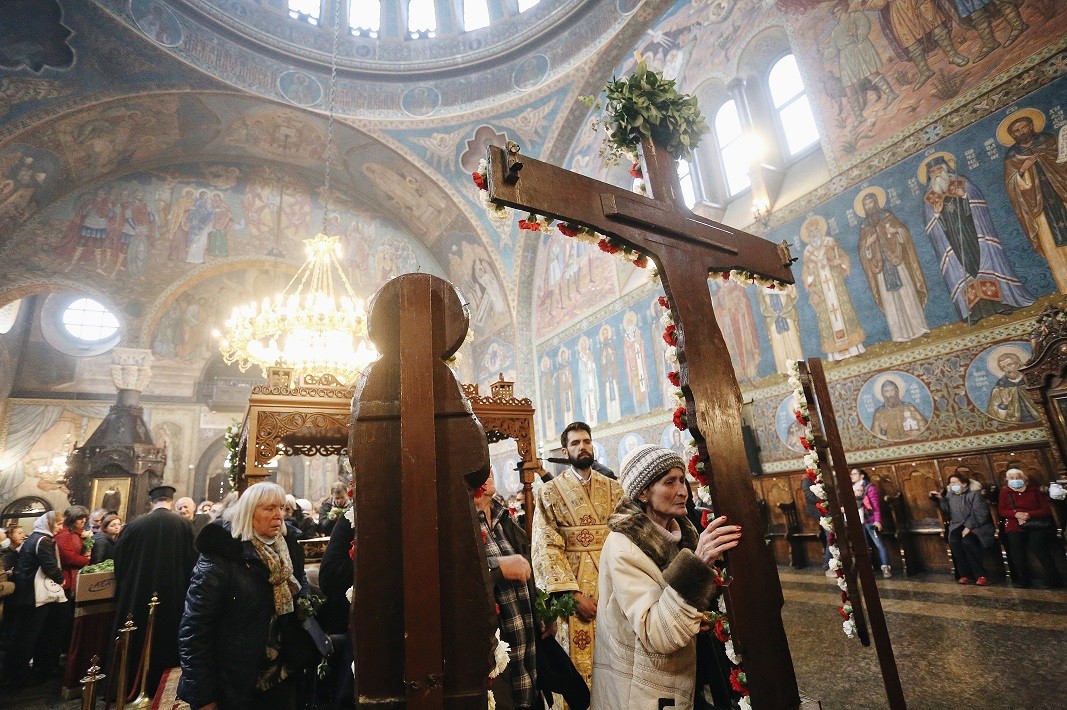
‎"Sepulchral lamentation" (Requiem Christ) – laudatory funerary chants on ‎Good Friday ‎

Photo: BGNES

During the holy liturgy in Orthodox churches of Bulgaria, there is one chant ‎that is performed only once a year. Only on Good Friday, the chant ‎‎“Nadgrobnoe ridanie" (Sepulchral lamentation in English), also known as the ‎‎"Opelo Christovo” (Requiem Christ) can be heard in churches here. It is part of a divine liturgy ‎connected with the Crucifixion and is a synthesized "narrative" of the Passions ‎of Christ (the sufferings of Jesus Christ) and the death of Jesus on the cross. ‎

The chant "Nadgrobnoe ridanie" is composed of three parts and has a specific and original melody ‎that has reached us unchanged from time immemorial. On the basis of this ‎anonymous work, one of the masters of the first generation of Bulgarian ‎composers, Dobri Hristov (1875-1941), created a unique polyphonic ‎composition that is still performed in churches today. In this way, the ‎sacrament of the Crucifixion and death on the cross is transmitted as a message ‎to the laity. This sacred moment is very moving and very sad and makes one rethink life. 

Within about 40 minutes, as is the duration of the chant ‎‎"Nadgrobnoe ridanie", the holy liturgy tells us about the pains and sufferings of ‎Christ to become the sacrificial lamb for all people and then to rise again. For ‎this, the songs do not sound so much like a lamentation but rather a praise of Christ's ‎deeds, of the victory over death and as an anticipation of the coming ‎Resurrection.‎


The version of "Nadgrobnoe ridanie" of the Svetoglas male ‎vocal group is shorter than the one performed in ‎church, but it recreates the main message of Good Friday. The music is by Dobri ‎Hristov - the composer who contributed the most to the development of ‎Eastern Orthodox music in Bulgaria. ‎

After studying composition in the class of Antonin Dvorak in Prague, Dobri ‎Hristov worked almost his entire life for the creation and development of ‎choral singing in Bulgaria, notes the prominent choral conductor Prof. Teodora ‎Pavlovich in a review of the Svetoglas album. ‎According to her, it is an exciting fact that the performance of "Nadgrobnoe ‎Ridanie” of the formation was carried out according to the author's ‎manuscripts preserved in the Patriarchal Church of St. Alexander Nevsky in ‎Sofia.‎


Translated and published by Rositsa Petkova


Последвайте ни и в Google News Showcase, за да научите най-важното от деня!
Listen to the daily news from Bulgaria presented in "Bulgaria Today" podcast, available in Spotify.

More from category

Nadejda Tzanova

Leading Bulgarian musicians join Estonia’s Evgeny Mravinsky festival

On 23 and 24 November, in Narva and Tallinn, the Narva City Symphony Orchestra (Narva Linna Sümfooniaorkester) under chief conductor Anatoli Shchura presents an intriguing programme featuring works by Mozart, Alfred Schnittke, and Bulgarian composer..
published on 11/21/25 9:35 AM

"Against Time" … The return of Factor Band

“Friends”, “The Main Street”, “The Tall Girl”, “Till the Last Hour”, “Guitar on the Platform”, and many more… Rock hits with deep lyrics and messages that shaped more than one generation — this is what we find in the new double live album by the band..
published on 11/20/25 1:12 PM

Unique opera and ballet festivities in Stara Zagora to start on November 21

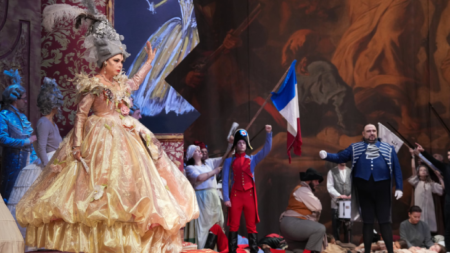
One of the most significant events on Bulgaria’s cultural calendar - the Festival of Opera and Ballet Art in Stara Zagora - traditionally will open with a premiere by the host company, the Stara Zagora State Opera .  On November 21 and 22,..

published on 11/20/25 7:25 AM